
Home / Small molecules / Integrated Services / Analytical
Analytical Development and Quality Control
12,500+ chromatographic methods developed a year, 39,000+ batches released, and a nitrosamine platform with a 10 ppb generic method.
Where analytical work fails
A method that resolves every peak at Phase I and cannot resolve a new impurity at Phase III is usually discovered during a regulatory review. So is a specification set on three batches that cannot be justified on thirty.
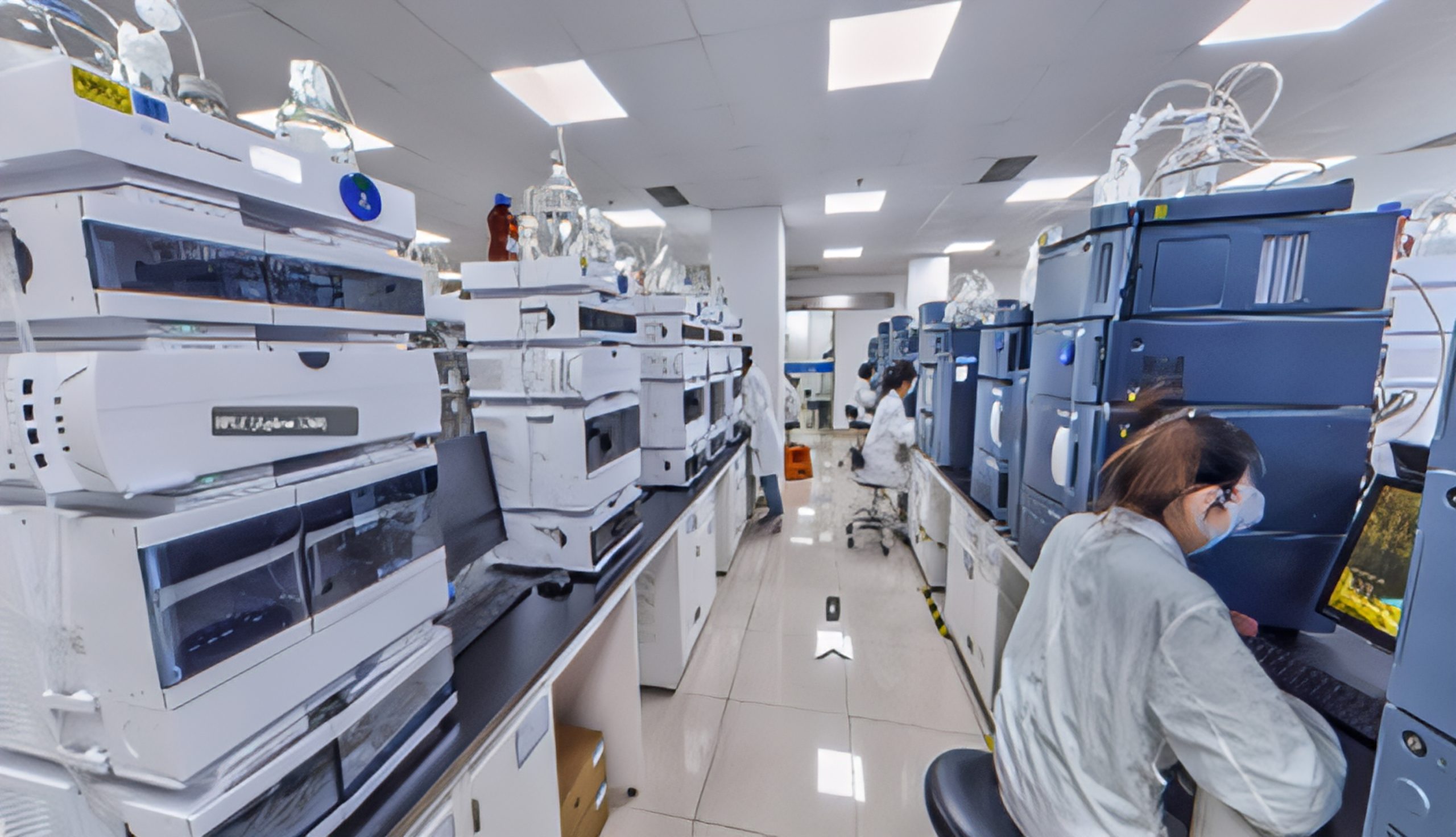
The scale of the analytical operation matters because method development improves with the number of methods developed. More than 3,500 analytical scientists work across the development and manufacturing sites, developing more than 12,500 chromatographic and 2,300 non-chromatographic methods a year, characterizing over 600 structures for IND and NDA filings, and identifying more than 200 impurities and degradants by LC-MS, preparative HPLC isolation and NMR.
Analytical development
Method creation, verification, structure elucidation and impurity work, for drug substance and drug product, across small molecules, peptides and oligonucleotides — including high potency compounds at an occupational exposure limit of 10 ng/m³.
The service covers drug substance and drug product method development and validation, release testing, ICH stability studies, reference standard characterization and qualification, potential genotoxic impurity method development and testing, impurity and degradant isolation and structure elucidation, packaging system evaluation including container-closure integrity testing, and sterility testing with species identification.

Nitrosamines and genotoxic impurities
Nitrosamine control has become a standing requirement for regulators, and the trace-level methods it requires are specialized.
We have run more than 200 nitrosamine control projects, supported by a genotoxic impurity method library of more than 3,500 methods, including a generic UPLC-MS/MS method with a 10 ppb limit of quantitation covering NDMA, NMBA, NDEA, NEIPA, NDIPA, NMPA, and NDBA, meeting FDA, EMA, and NMPA requirements. Specific ppm-level methods cover nitrosamine drug substance-related impurities.
Behind the nitrosamine work sits a genotoxic impurity evaluation platform with a database of more than 3,000 genotoxic impurities and more than 2,000 methods.
Method validation and QC release
Method qualification and validation for IND, NDA, and commercial use, with GMP method transfer performed to USP <1224>. Full release testing across raw materials, reagents, intermediates, drug substance, and drug product.
More than 39,000 drug substance batches and 3,800 drug product batches are released across the platform every twelve months, with more than 3,000 stability batches on ongoing study. More than thirty pre-approval inspections have been waived by the US FDA and EMA since 2023.
Dedicated high potency QC laboratories operate at the same 10 ng/m³ limit. Laboratory systems run on LIMS, ELN, TrackWise, Veeva, and Empower.
Stability studies
Accelerated and long-term stability under ICH conditions, forced degradation with impurity qualification and quantitation, and in-use stability where the administration route requires it.
For parenteral products, container-closure integrity testing covers quantitative methods, vacuum decay, and high-voltage leak detection, as well as qualitative microbial challenge and tracer liquid methods.
Drug product analytical
End-to-end analytical development for both oral and parenteral drugs across dosage forms and filling formats, including high potency drug product analysis for oral and injectable forms.
The drug product analytical teams have supported 2,000+ clinical projects, including 40+ late phase projects, and have submitted 500+ IND dossier files and 35+ NDA and ANDA dossier files.
Instrumentation
- Chromatography: UPLC, HPLC, nano HPLC, GC, IC, SEC, SFC, 2D-UPLC, HPLC-CAD
- Mass spectrometry: Q-TOF, MALDI-TOF, LC-Orbitrap, LC-MS, 2D LC-MS, GC-MS, LC-QQQ
- Solid state characterization: XRPD, DVS, DSC, TGA with MS interface, particle size distribution, nano-particle size analyzer, polarized light microscope, SEM, surface area analyzer
- Identification: NMR at 400 and 600 MHz, HRMS, FT-IR
- Elemental analysis: ICP-OES, ICP-MS
The data your filing rests on
Twelve and a half thousand chromatographic methods a year means that most method development problems have been met before, and a method for a new molecule starts from that record.