
Home / Oligonucleotides and Peptides / Drug Product / Oral Drug Product
Oral Drug Product
Establish whether the molecule can be delivered orally at all, before a campaign is committed.
Why oral peptides fail
Oral delivery is among the hardest problems in peptide development, and most candidates do not survive it. Instability in the gut, low permeability and poor systemic exposure usually arrive together, so the first decision is whether the molecule can be formulated for oral delivery at all.
Developability assessment
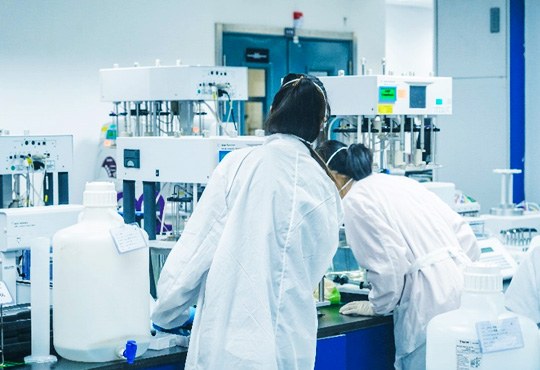
The first work is a developability assessment on minimal API: solubility, stability in both the solid state and GI-relevant conditions, and permeability. That is enough to establish which leads justify an oral program before a campaign is committed.
Early formulation work happens when API is most scarce, and a formulation decision that has to be reversed later brings new stability data requirements, comparability work and a bridging study with it.
Formulation development
For leads that survive, development moves to parallel screening of stabilizers and permeation enhancers, supported by physical form work and advanced formulation approaches — solid dispersions, self-microemulsifying delivery systems, and oral solid or liquid dosage forms.
From the start of feasibility to GMP clinical material typically takes six to eight months.
.jpg)
Spray-dried dispersion
An oral peptide that needs a solid dispersion to reach useful exposure has a narrow set of options, because peptides generally do not tolerate the thermal processing routes, which leaves spray drying.
The spray drying platform runs more than 460 batches a year, from 50 mg at laboratory scale through to 100 kg and beyond at commercial scale, on PSD-1, SD-2, PSD-3 and PSD-4 dryers. One program scaled from PSD-1 to PSD-3 in three months and delivered 1,400 kg of spray-dried intermediate for a Phase III trial.
Dosage forms and capacity
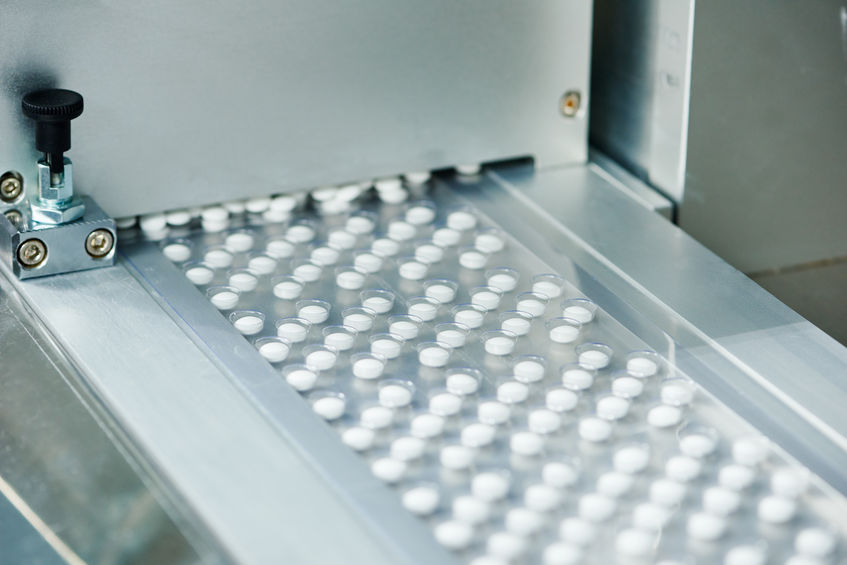
The tableting and encapsulation capacity already exists and is validated: tablets, capsules, powders, granules, liquid in bottle, liquid-filled hard capsules and softgels, with annual capacity in the billions of doses.
The platform has supported more than 1,000 drugs from preclinical to commercial, across sites at Shanghai Waigaoqiao and Wuxi City in China, Couvet in Switzerland and San Diego in the United States.
In 2022 the oral solid team evaluated 2,498 molecules in preformulation studies, delivered more than 2,815 clinical batches, and worked on more than 45 late-phase and commercial projects.
High potency oral
For potent molecules, contained manufacture continues into the oral dosage form at an occupational exposure limit of 10 ng/m³, with annual capacity running to 1.1 billion doses for high-potency oral solids.
IND and IMPD-enabling manufacturing
Clinical drug product development and GMP manufacture are coordinated to support toxicology studies and Phase I supply, covering manufacture, packaging, labeling and batch release in one place.
Because formulation development, analytical development and API process development run in the same program, the specification the drug product is released against is the one the drug substance was developed toward.
Developability before commitment
Most oral peptide candidates fail, and the developability assessment exists to establish which will, on as little material as possible, before a campaign is committed.
For the candidates that pass, feasibility to GMP clinical material typically takes six to eight months.