
Home / Oligonucleotides and Peptides / Discovery / Peptide / Discovery Synthesis
Peptide Discovery
Cyclic, modified and long peptide sequences, from parallel libraries to kilogram scale.
The peptides that are hard to make
A linear 20-mer is a commodity, and most discovery programs are working on something else: a macrocycle with two disulfides in difficult positions, a sequence carrying three unnatural residues that are not commercially available, or a sequence long enough that stepwise synthesis degrades.
That is the work this platform is built for. We deliver more than 50,000 peptides a year, from milligram to kilogram scale.
Library synthesis
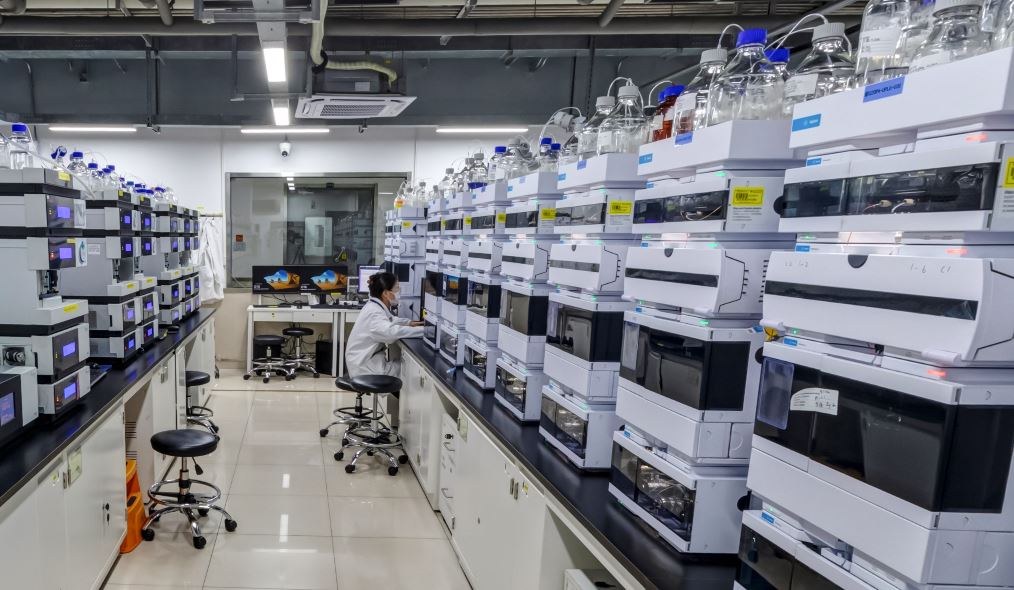
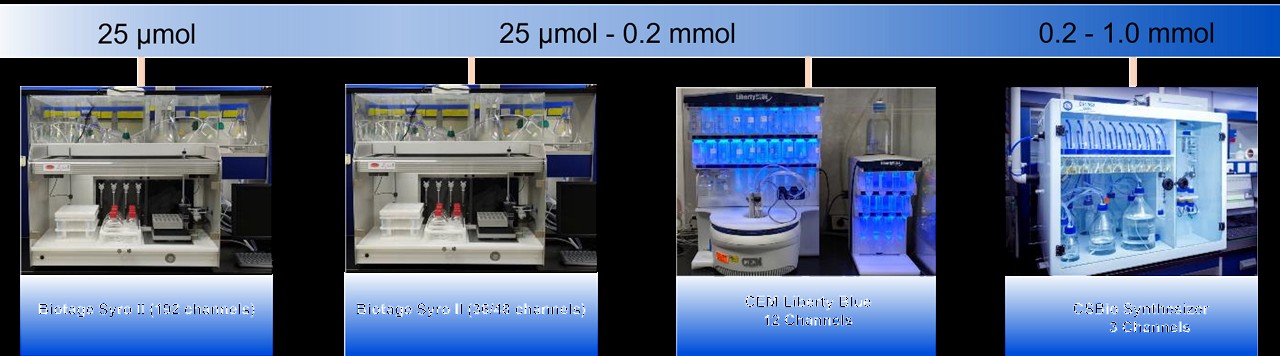
Fifteen high-throughput peptide synthesizers running from 10 µmol to 1.0 mmol, synthesizing libraries of up to 800 peptides in parallel at a success rate of up to 96%.
A stated success rate means a library can be planned around the fraction that will need resynthesis.
Turnaround
Two weeks for most peptides under 30 residues at milligram scale. Where a program needs non-GMP material for candidate selection and early formulation work, scale-up delivers in five to seven weeks.
Cyclization
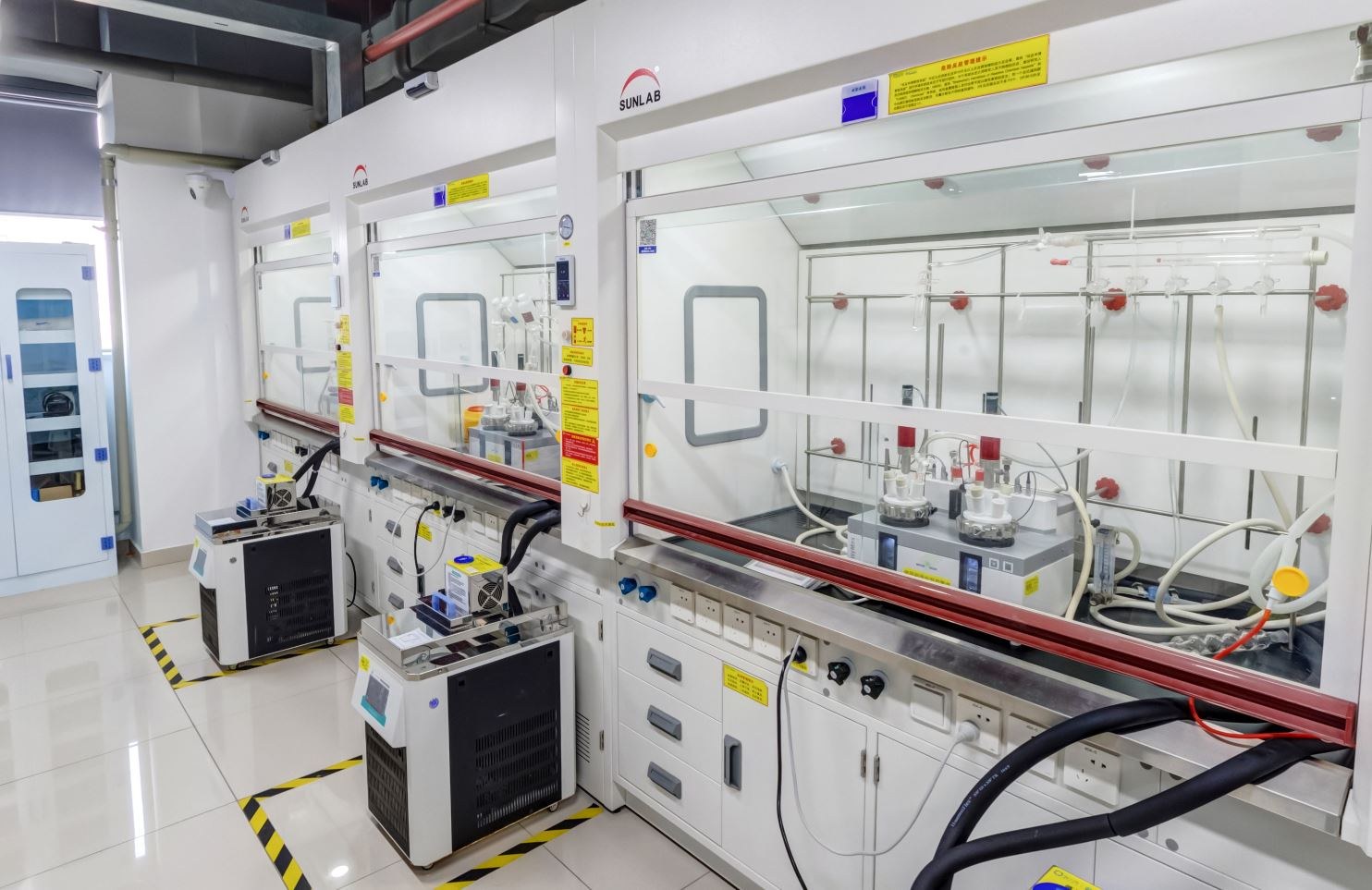
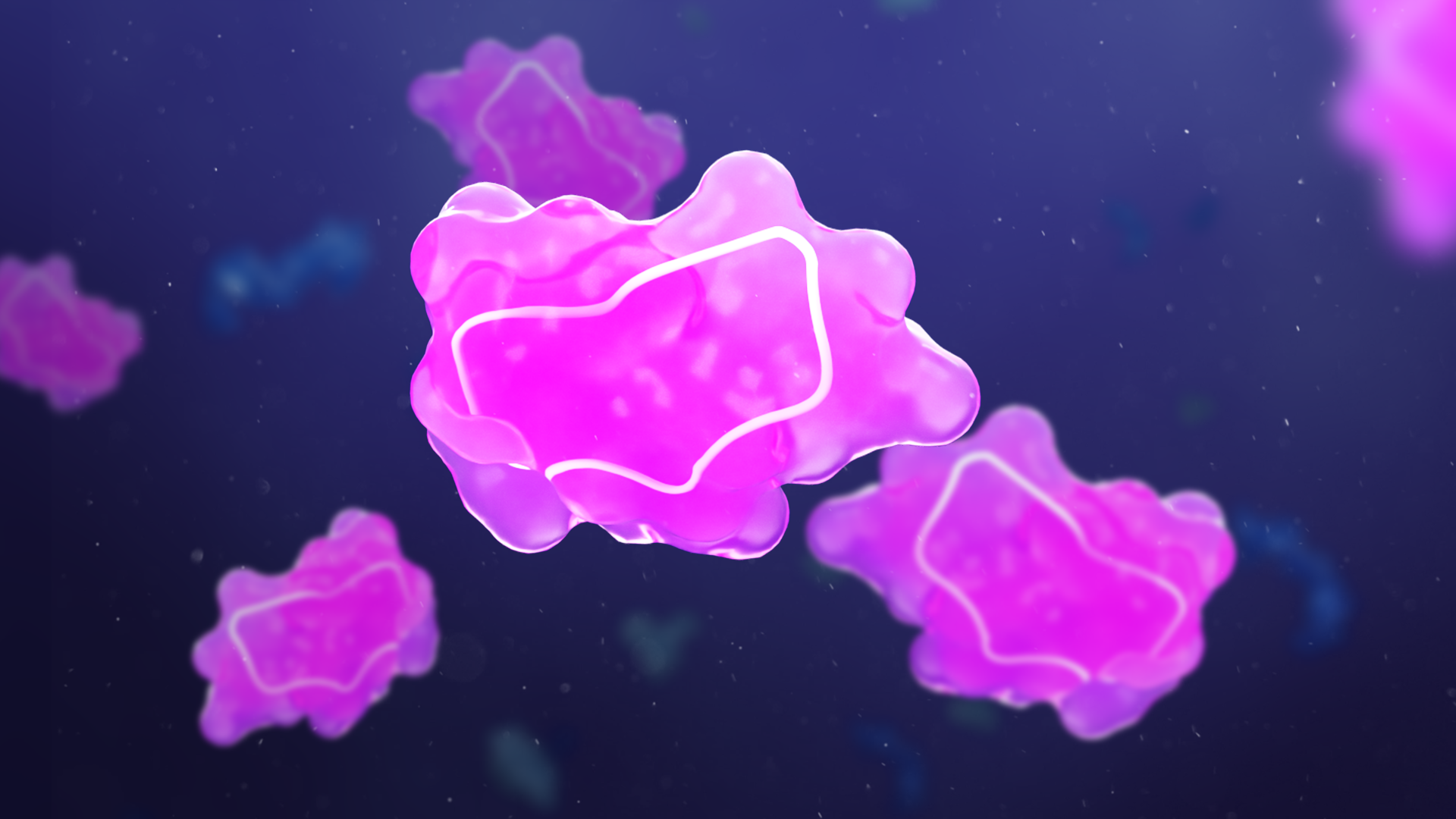
Cyclization is the most common route to a peptide that survives in plasma, and the strategy usually has to be chosen empirically rather than predicted. We run single, double and triple disulfide formation, click cyclization, lactone and lactam formation, and ring-closing metathesis, at head-to-tail, head-to-sidechain, sidechain-to-sidechain and sidechain-to-tail positions.
More than 100,000 cyclic peptides delivered means the strategy for a new sequence is selected from a body of results. Where the standard approaches fail, thioether cyclization, multi-cyclization, Suzuki coupling and Ugi chemistry are also available.
Long sequences
Stepwise solid-phase synthesis degrades predictably with length. Native chemical ligation addresses that by making fragments separately and joining them, supporting sequences up to 150 amino acids. KAHA ligation is available where the sequence does not suit a cysteine-based junction.
Modification and unnatural residues
N-terminal and C-terminal modification, dye and fluorescent labeling, biotinylation, PEGylation, post-translational modifications, DOTA and NOTA labeling for radionuclide work, and isotope labeling.
Unnatural amino acids are made in-house: more than 2,500 in the catalog and 16,000+ custom unnatural amino acids delivered since 2019. A design that needs a residue that is not commercially available is a synthesis question at WuXi TIDES.
Purity when the assay demands it
Standard discovery purity is sufficient for most screening. Where an assay or an in vivo study needs more, we deliver to 99.9%, with amino acid analysis and enantiomeric purity assessment available to quantify D-isomer content.
The sequences the platform is built for
The platform is built for the macrocycle with three unnatural residues and the 150-mer, and the cyclization strategy recommended for a new sequence comes from more than 100,000 cyclic peptides delivered.