
Home / Small molecules / Drug product / Oral drug products / Oral solid manufacturing
Oral Drug Product Manufacturing
The same lines from the first clinical batch to routine commercial supply.
Clinical and commercial on one platform
We have manufactured clinical trial material since 2008, supplying batches to the United States, the United Kingdom, the European Union, China, Japan, Korea, Australia, New Zealand, and Thailand.
We deliver more than 3,200 oral batches a year. Across all drug product, 3,800+ batches go out in 2,000+ shipments to the United States, Europe, China, and other markets.
Multiple plants allow parallel production, which is what makes a time-sensitive supply possible. All facilities across China, Europe, and the United States share the same global standard and are approved by the major regulatory agencies.
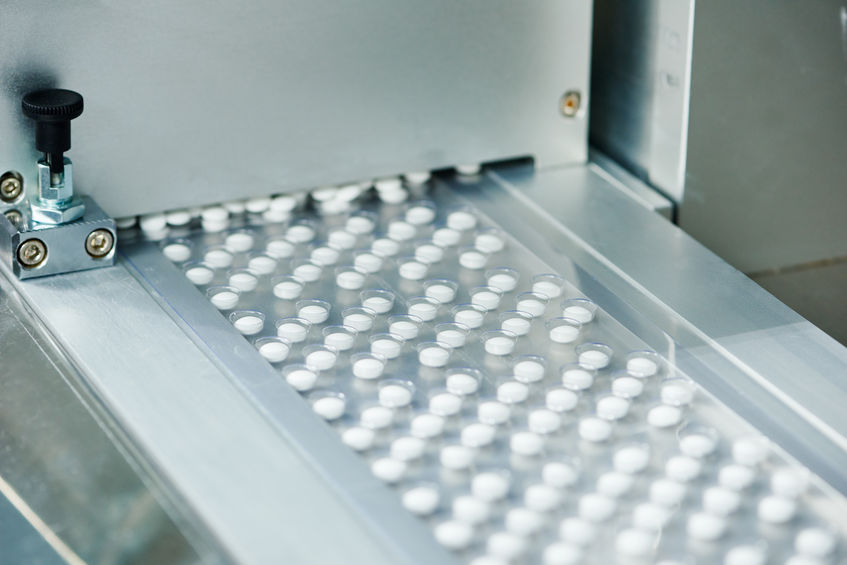
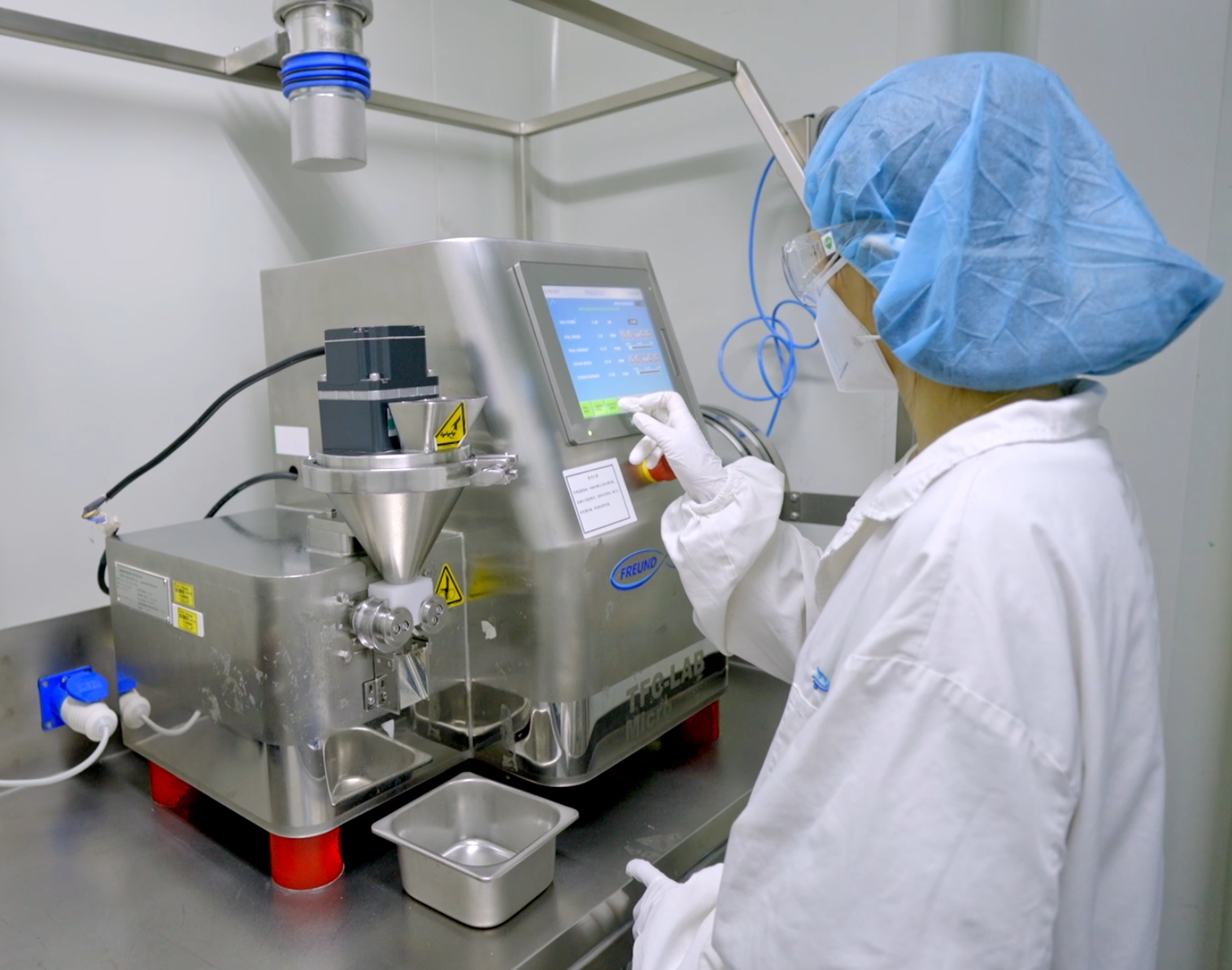
Manufacturing platform
- Blending
- Roller compaction
- Wet granulation, high shear and fluid bed
- Compression
- Pelletisation by extrusion and spheronisation
- Coating
- Encapsulation
- Continuous manufacturing
Process development and scale-up
Moving from a development batch to a registration batch is where formulation problems most often appear — blending uniformity that held at 2 kg and does not at 200 kg, a granulation endpoint that shifts on a different mixer, a tablet that will not compress at line speed.
Continuous manufacturing
A continuous manufacturing line for oral solids runs at the Wuxi City site. It uses continuous direct compression, with dispensing, blending, lubrication, tablet compression and coating as unit operations, and the equipment design complies with global GMP regulations.
Process analytical technology is built into the line to monitor blending uniformity, giving real-time analysis and control during production.
Registration and validation batches
Registration batches are made under the process that will be validated, on the equipment train intended for commercial manufacture, using the analytical methods that go into the filing. They generate the stability data the application rests on, so a change made after them carries a comparability obligation.
65 new chemical entities have been taken through drug product validation, and 17 commercial products are in supply.
Commercial capacity
Annual oral capacity is more than 10 billion doses.
That platform covers the whole commercial range. A high-volume product has the capacity for a launch that runs ahead of forecast and for the markets added after it. A product with a modest forecast, an orphan indication or a narrow launch market, runs at the batch sizes it needs, under the same quality system.
Where commercial products are made
Couvet, Switzerland — 2 billion tablets and 250 million capsules a year, with seven late-phase and commercial projects running. A PSD-4 spray dryer comes online in Q4 2026, bringing spray-dried dispersion to commercial scale in Europe.
Wuxi City, China — 12 plants covering tablets and capsules, high-potency oral solids, sterile formulation, ointment and gel. Passed an EMA pre-approval inspection in January 2026 with no critical findings.
Shanghai Waigaoqiao, China; San Diego, California; and Middletown, Delaware, where oral solid manufacturing, packaging, and distribution begin in Q4 2026.
Our drug product sites have been inspected by regulators in the United States, the European Union, China, Japan, South Korea, the United Kingdom, Brazil, Switzerland, Australia, New Zealand, and Canada.
Packaging and labeling
Packaging and labeling run in the same operation, with no hand-off: bottle, blister and sachet, open-label and double-blind. On a blinded trial, a labeling error is a protocol deviation.
Packages are designed to protect from humidity, light and adulteration, and are tested across options as the compound progresses. Placebo and over-encapsulation are manufactured for blinding.
Lifecycle management
Products change after approval: a new market with different packaging requirements, a second strength, a process improvement worth filing.
The aim in commercial supply is that it needs no attention from the sponsor: batches release on schedule, markets are supplied, and post-approval changes go through without interrupting either.