
Home / Small molecules / Drug substance / Manufacturing
API manufacturing
The same plants, the same quality system and the same people from the first GMP batch to routine commercial supply.
One supply chain across the program
We manufacture small molecule intermediates, building blocks, and drug substance, including high potency drugs, from a few grams to metric-ton scale.
Several hundred modern reactors run from 5 L to 20,000 L, with more than 4,000 m³ of total reactor volume. The global network integrates manufacture of starting material, intermediate, and drug substance, so a molecule does not change organization as it scales.
All sites run one quality system, with a proven record of inspections by the US FDA, EMA, China NMPA, and other health authorities.
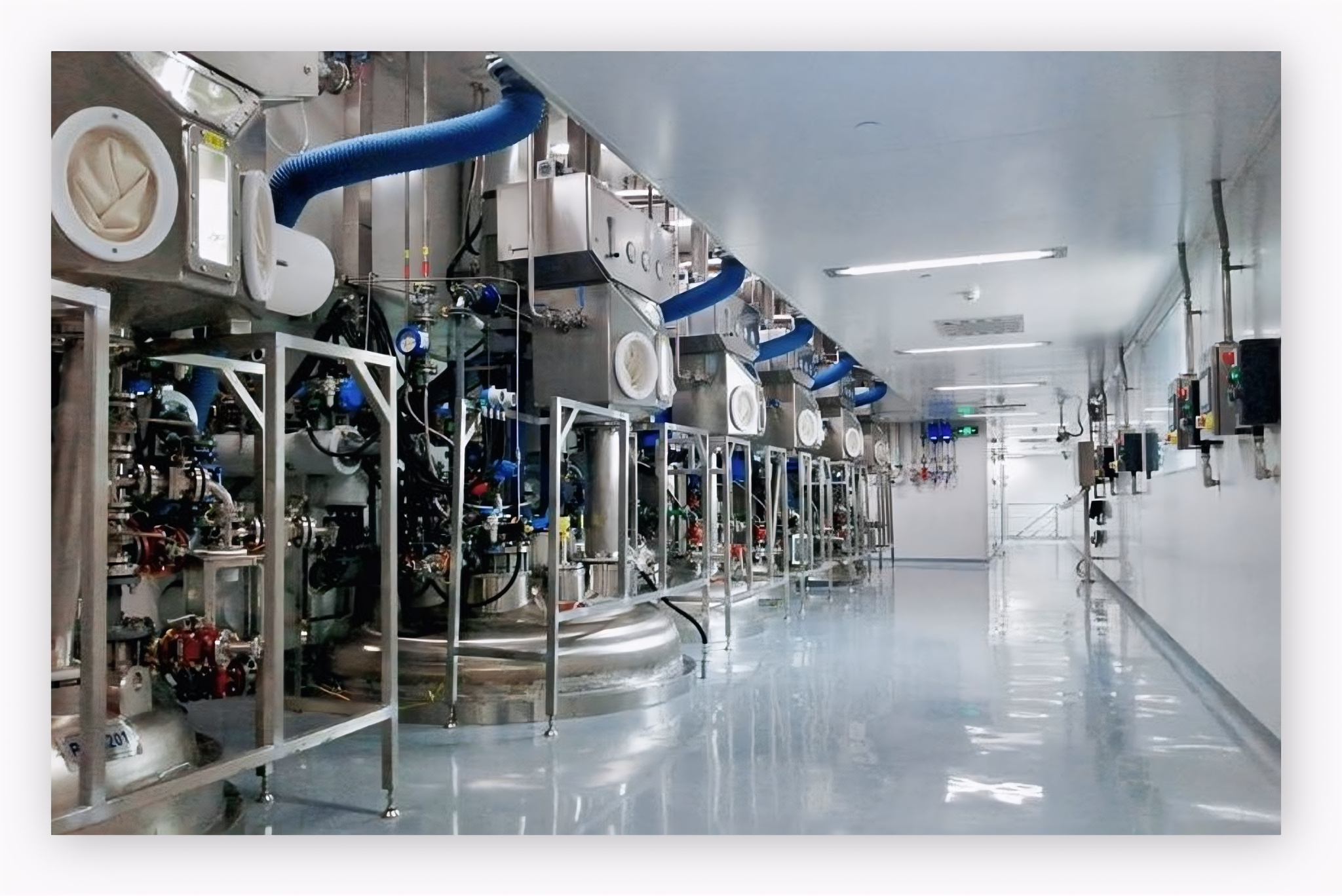
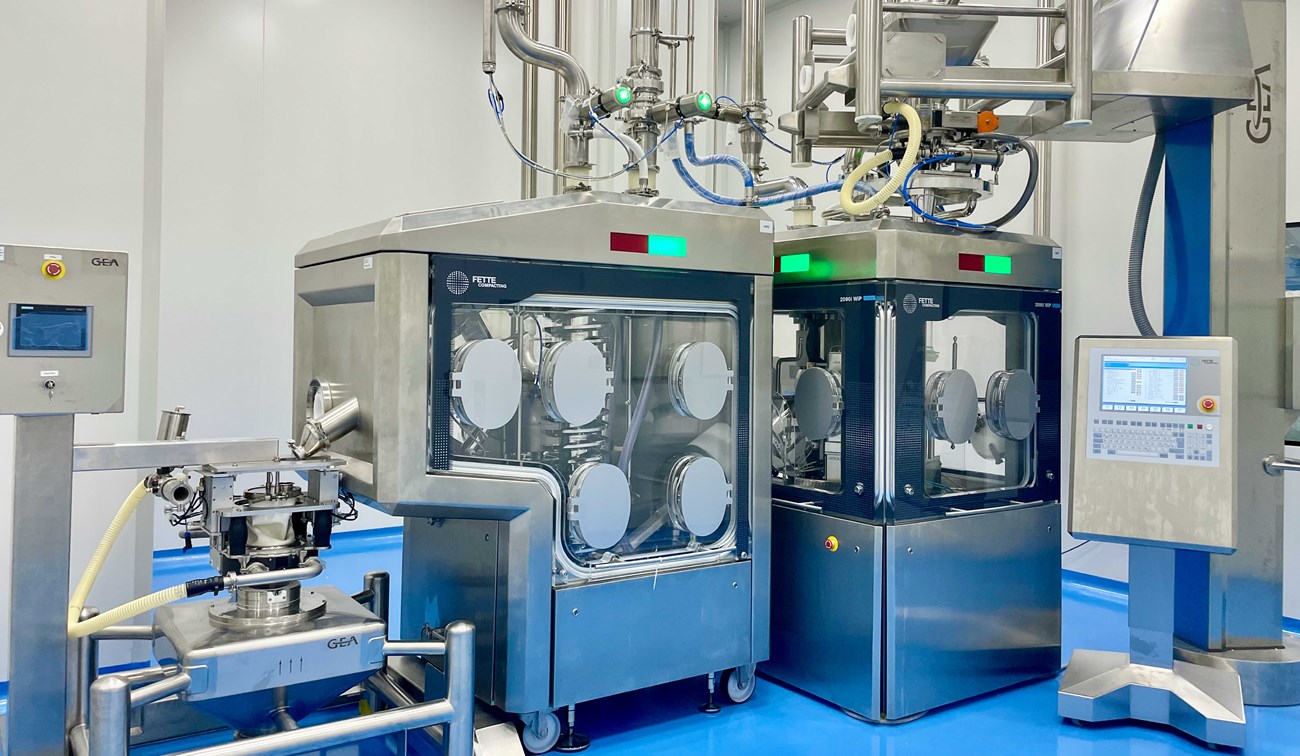
Preclinical and IND-enabling manufacturing
Toxicology supply, first GMP batches, and the CMC section that goes with them. Analytical development, stability, and dossier preparation run in parallel with the chemistry.
Clinical manufacturing and scale-up
Phase III needs substantially more API than Phase I, and the process has to arrive at that scale without a change to the impurity profile or the solid form.
GMP plants run batches up to metric-ton scale, so the scale-up happens inside one organization rather than across a technology transfer.
Commercial supply
We supply more than 70 commercial products. Across all of them, on-time delivery is 100%, and the deviation rate on commercial batches is below 0.3%.
39,000+ drug substance batches a year, across 33 plants and more than 4,000 m³ of reactor volume. Batch sizes run from kilograms to metric tons, depending on the product.
The Changzhou and Shanghai Jinshan sites have supported more than 50 PPQ projects between them. Cross-functional teams covering analytical and global filing carry a product through the commercialization steps.
Where the API is made
Our API network runs across North America, Europe, and China, with a Singapore site scheduled for 2027. A commercial process can be sited at more than one of them.
Drug substance sites: Changzhou, Taixing, Shanghai Jinshan and Shanghai Waigaoqiao in China; San Diego, California; and Tuas, Singapore. Facilities are approved by the US FDA, EMA, China NMPA, Japan PMDA, SwissMedic, and Korea MFDS.
A second manufacturing site is easier to design into a process during development than to add after approval, when it becomes a post-approval change.
Lifecycle management
Processes change after approval — a lower-cost starting material, a new market with different requirements, a yield improvement worth the filing effort. A dedicated lifecycle management team assesses and improves product performance after launch.
After launch, commercial supply becomes largely a change control question: a new market, a change of raw material supplier, a shelf-life extension. Each one is assessed against what the filing already says, by the organization that generated the original development data.
Sustainable manufacturing
Carbon emissions across drug substance production are down 12.15% and water consumption down 36% against a 2020 baseline.