Home / Oligonucleotides and Peptides / Discovery / Oligonucleotide / Discovery Synthesis
Oligonucleotide Discovery Synthesis
Modified sequences, long constructs and controlled endotoxin, delivered at the pace screening runs.
What a discovery batch has to deliver
A discovery program has to deliver enough sequences to answer the SAR question and deliver them clean enough for the assay that follows. A batch that fails an in vivo study on endotoxin has to be remade.
We deliver more than 100,000 oligonucleotides a year — DNA, siRNA, ASO, miRNA, sgRNA, shRNA, PMO and aptamers — from sequence design through to preclinical candidate, with dedicated analytical support for all required testing. Orders of a few hundred sequences turn around in one to two weeks. Decagram batches take two to three weeks.
Modifications
Backbone, sugar and stereochemical modification is where most oligonucleotide discovery work now sits. More than 40 ribofuranosyl modifications and more than 10 backbone modifications are in routine use: 2′-H, 2′-OH, 2′-F, 2′-OMe, 2′-MOE, LNA, cEt and spacer chemistries, with 3′ and 5′ modification including GalNAc, triphosphate, cholesterol, saccharides, peptides and maleimide.
Beyond the standard set we work with chirally controlled ASO and siRNA designs including PS and MsPA backbones, and sugar skeleton modifications such as 2′-lipid RNA, TNA and TMO. Lipidation and PEGylation of RNA are routine. If a design has been described in the literature and not yet made, it is worth asking.
Long sequences
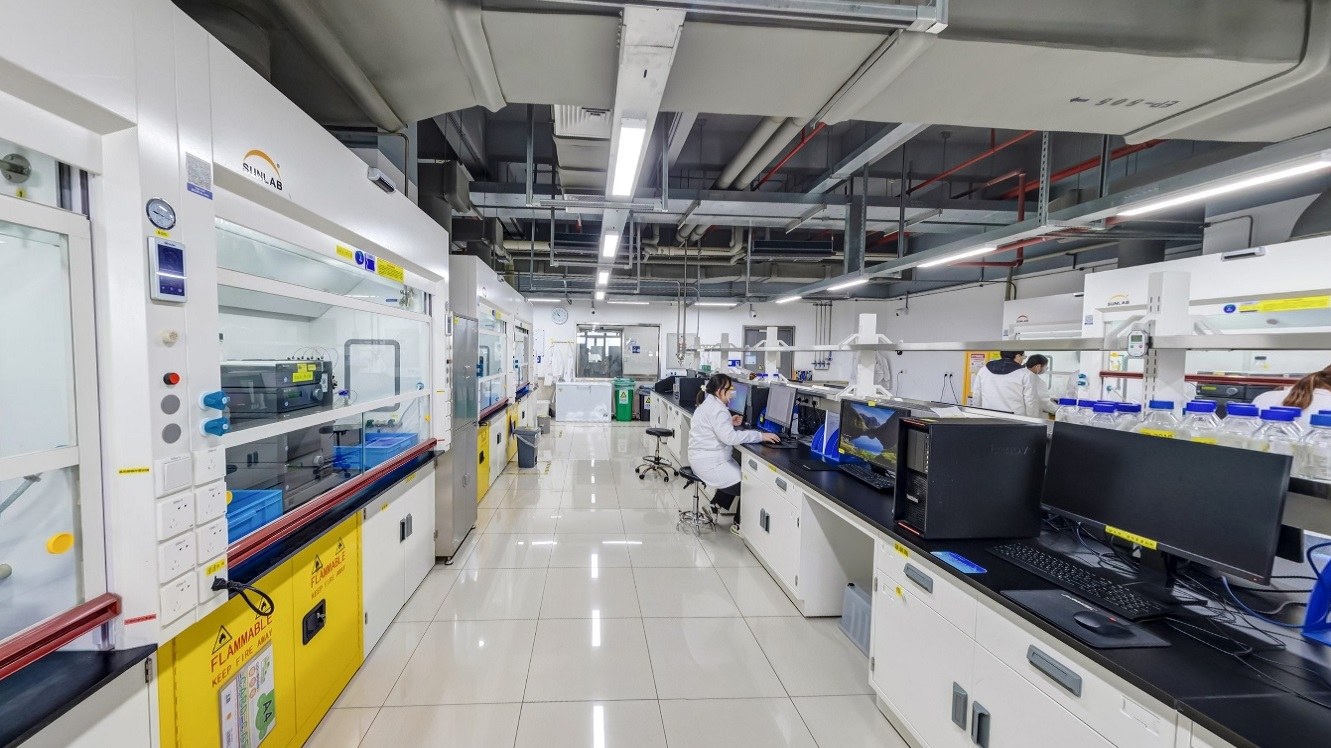
Stepwise synthesis accumulates deletion and truncation impurities with every coupling, and beyond about 60 residues the purification burden starts to overtake the synthesis.
We work regularly in the 60 to 158 mer range for both single-stranded and double-stranded RNA, with 158 nucleotides the longest delivered, using ligase-enabled strategies for long RNA and for circular RNA constructs.
Purification matched to scale
The purification method usually determines more about a discovery batch than the synthesis does, and the right method depends on the quantity of material and what it is for.
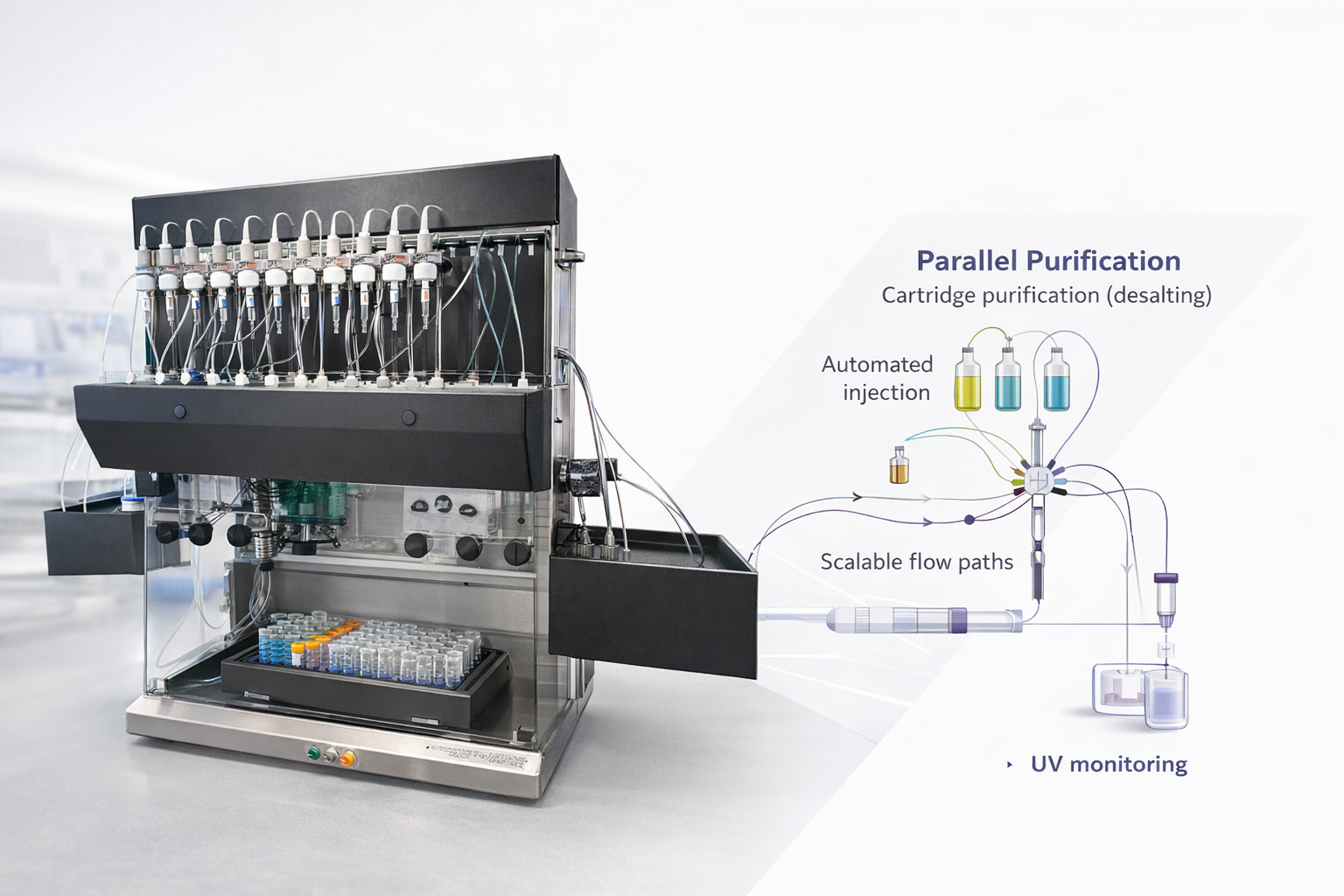
- Cartridge purification, or desalting — high-throughput purification of an oligonucleotide library
- Polyacrylamide gel electrophoresis — microgram scale, fastest turnaround, for screening quantities where speed dominates
- IP-RP HPLC — milligram scale with endotoxin control, the default for material going into cells or animals
- Anion-exchange chromatography — gram scale upward, the bridge into development quantities
- Customized methods combining IP-RP HPLC and AEX, developed per molecule when the purity specification will not yield to either alone
Endotoxin is controlled to 0.2 to 0.01 EU per milligram, the specification that determines whether a batch can be used in an in vivo study.
Synthesis scale
From nanomole to millimole:
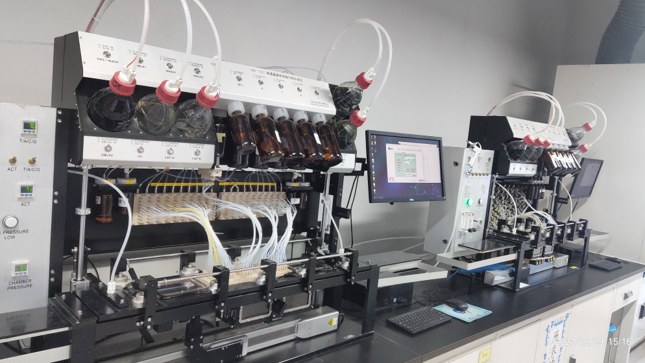
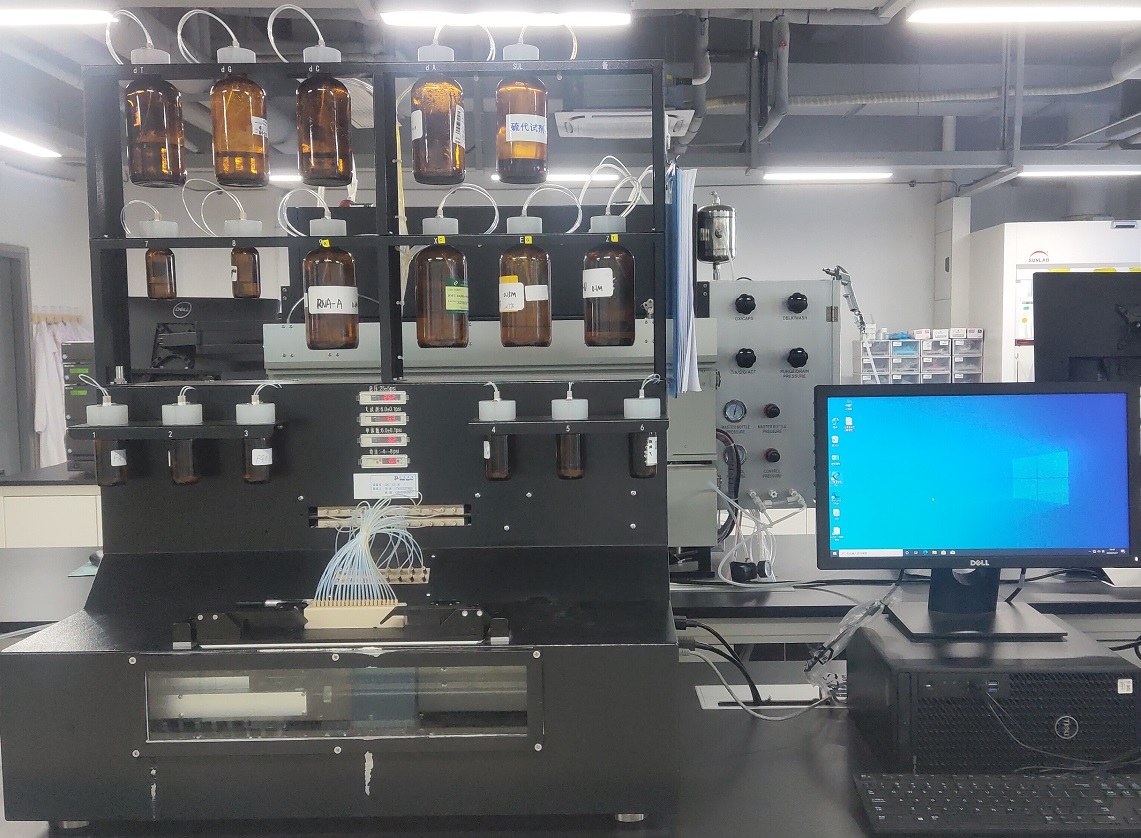
- Nanomole to micromole: 192-channel synthesizers
- Micromole to millimole: 16-channel synthesizers, OligoPilot 10 and OligoPilot 100 systems
Library synthesis in practice
Recent library orders:
| Quantity | Molecule | Scale |
|---|---|---|
| 234 | siRNA duplexes | at 200 nmol each |
| 144 | 5′-SMCC aptamers | at 375 nmol each |
| 206 | PMOs | at 300 nmol each |
| More than 40 | base-pair long and highly modified oligonucleotides | at 10 nmol each |
More than 55 PMOs and more than 45 PPMOs have been delivered, alongside more than 20 classes of oligonucleotide conjugate.
Case study
From library screening to non-human primate toxicology
02 / Scale-up
Analytical support at all scales.
Methods ready for the later toxicology study.
The same platform makes it at scale
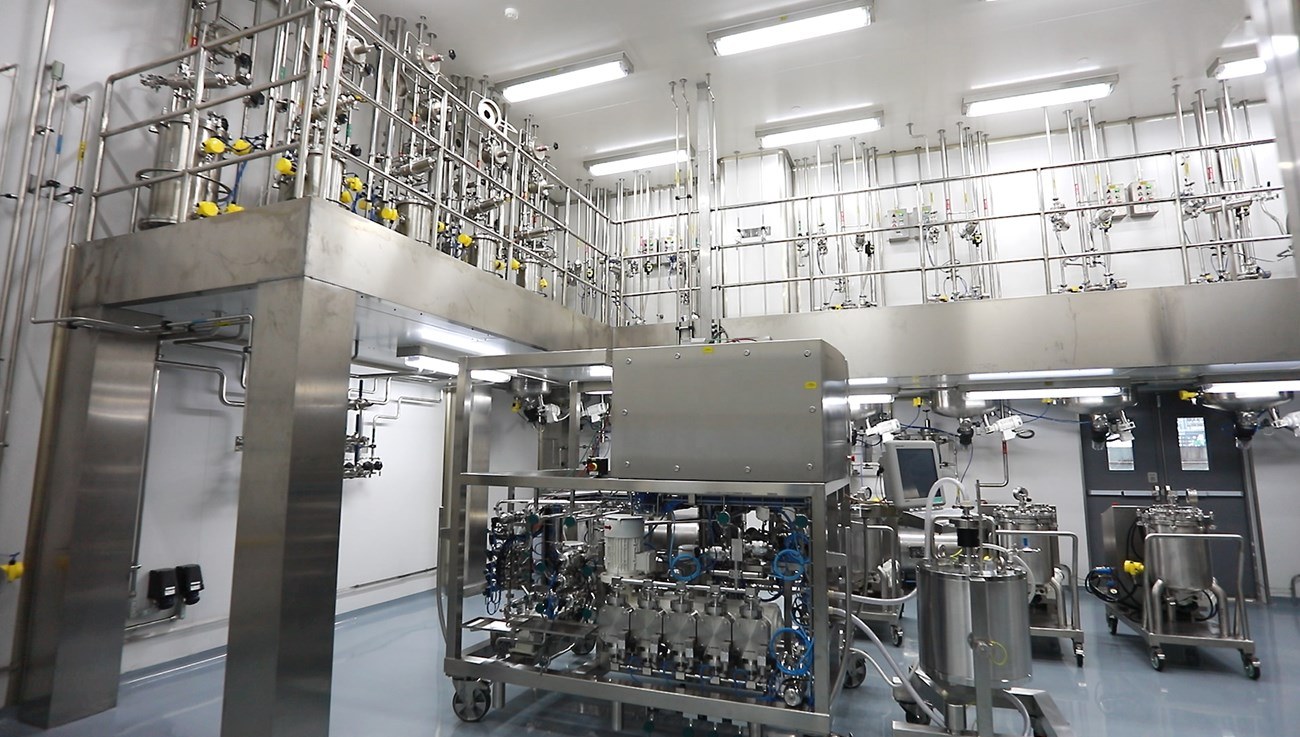
We support 126 oligonucleotide molecules across preclinical to commercial stages: 73 siRNA, 25 ASO, 21 PMO and PPMO, 6 sgRNA and tRNA, and one aptamer. The discovery chemistry above is the front of the same platform.
Clean enough to dose, fast enough to keep the screen supplied
A discovery batch has to do two things: answer the question with enough sequences, and be clean enough for the assay that follows. The purification ladder and the endotoxin specification exist so that a batch that arrives on time is also a batch that can be dosed.