
Home / Oligonucleotides and Peptides / Drug Substance / Peptide
Peptide Drug Substance
Peptide API process development, manufacturing and conjugation on one platform.
The route in the filing is the route that runs through Phase III
A sequence a discovery lab can make is not yet a sequence with a viable process, and the route is difficult to change once the IND-enabling campaign has started. Route scouting closes that gap.
A macrocyclic peptide of more than 30 residues arrived with a route yielding less than one per cent and a building block in short supply for the conjugation. The redesign synthesized main chain and side chain in parallel, cyclized on resin, and completed the API by solid-phase coupling — four times the yield. The conjugation process was optimized so that toxicology and GMP batches could be made efficiently, and with the workstreams running in parallel the whole project, including API process development, manufacture, formulation development and CMC writing, completed in nine months.
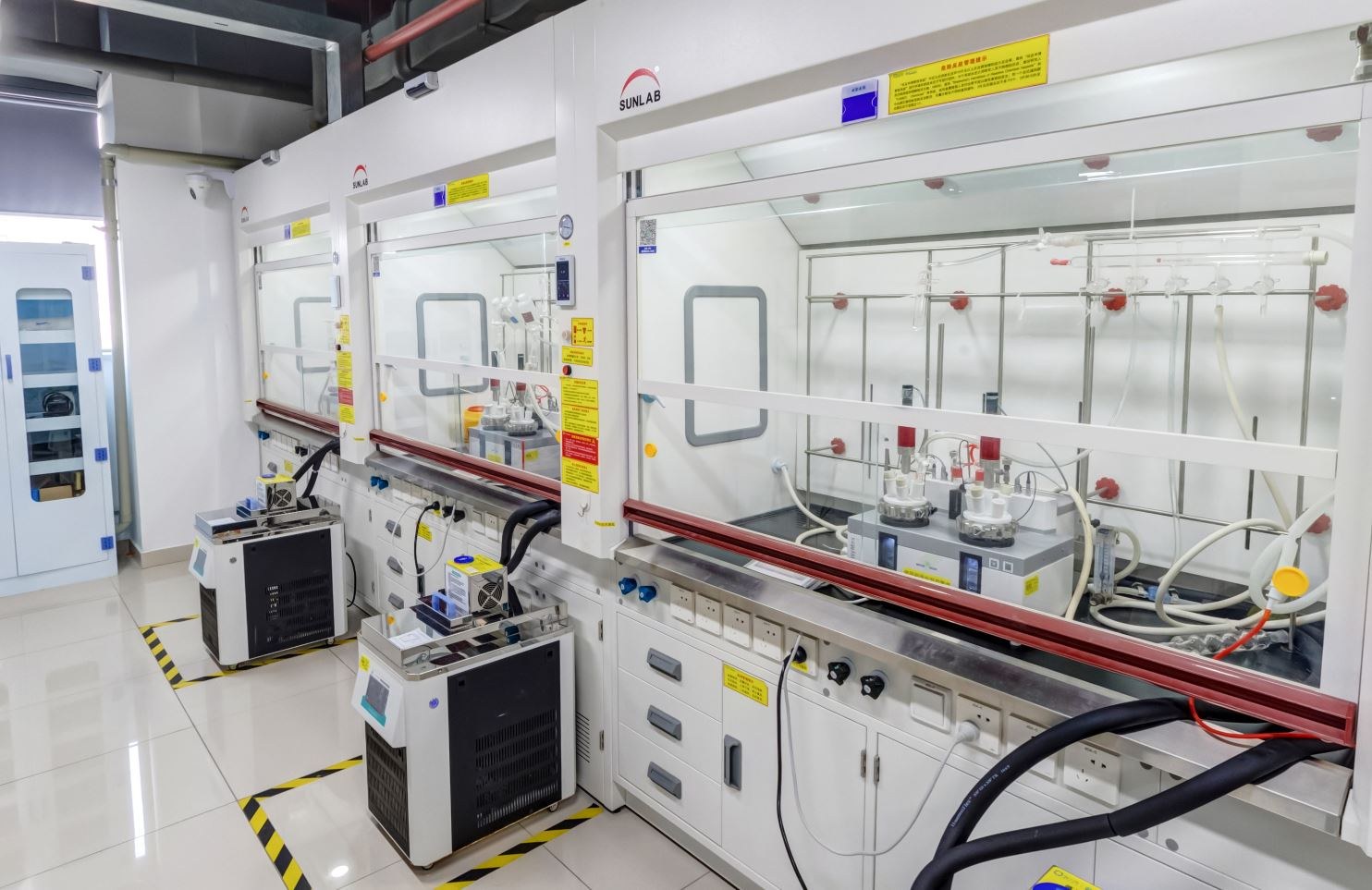
Process development
Our peptide development teams are several hundred scientists, supporting process development for a range of peptide modalities, unnatural amino acid derivatives and complex peptide conjugates from preclinical to commercial production:
Peptide modalities
- Long peptide
- Cyclic peptide
- Complex peptide, such as long peptides via chemical ligation, peptide nucleic acids, peptoids, peptidomimetic peptides, branched peptides and dendrimers
- Peptide conjugates, such as peptide-drug conjugates, radionuclide-drug conjugates and peptide-oligonucleotide conjugates
Process technology toolbox
The process technology toolbox behind that work:
- Solid-phase peptide synthesis, liquid-phase peptide synthesis and the hybrid approach
- Linear synthesis and convergent synthesis
- Continuous chromatography
Development covers coupling efficiency, resin handling and loading, solvent consumption, throughput and batch-to-batch consistency — the parameters that determine whether a process that works at 100 g works at 10 kg. For peptide programs, non-GMP scale-up delivers material for candidate confirmation and early formulation work in five to seven weeks.
Choosing between solid phase and liquid phase
Solid-phase is not always the right answer. Where a sequence is long, heavily modified or structurally difficult, a hybrid approach — assembling most of the sequence on resin and taking the difficult portion into solution — often gives better economics and a cleaner impurity profile than either method alone.
For a long or heavily modified sequence, that choice is the single largest lever on cost of goods, and it is made once.
Liquid-phase peptide synthesis at WuXi TIDES covers:
Liquid-phase peptide synthesis capabilities
- Route design and protection strategy selection for a wide range of peptides
- Quality by design, to support LPPS process performance qualification
- A dedicated crystallization process team, avoiding most prep-HPLC separation
- LPPS and SPPS combined, for complex peptide synthesis
- Both batch mode and flow mode
- Hydrogenation
Fragment ligation for long sequences
Stepwise synthesis accumulates deletion and truncation impurities with every residue, and past a certain length the purification burden overtakes the synthesis. Making the molecule in two pieces and joining them gives a cleaner product.
Native chemical ligation supports sequences up to 150 amino acids, with KAHA ligation available where the junction does not suit a cysteine-based approach. Ring-closing metathesis and click chemistry sit in the same toolkit for the cyclization problems that often accompany long sequences.
Manufacturing
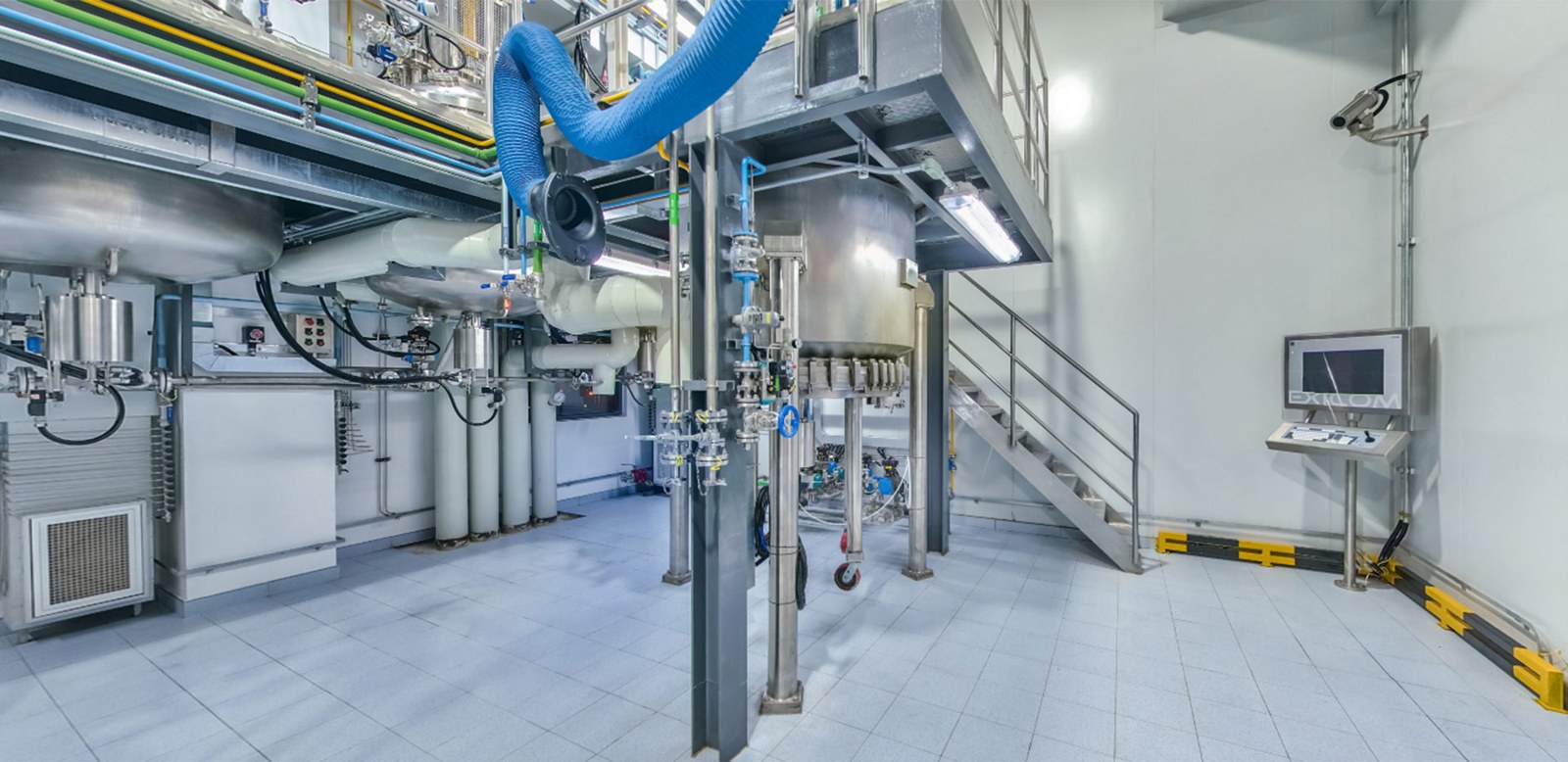
We supply peptide APIs from gram to metric ton scale under a global standard quality system. Our custom synthesizers and cleavage systems are designed to minimize the risk of microbial contamination and of cross-contamination.
Manufacturing capacity, scale-up and sites
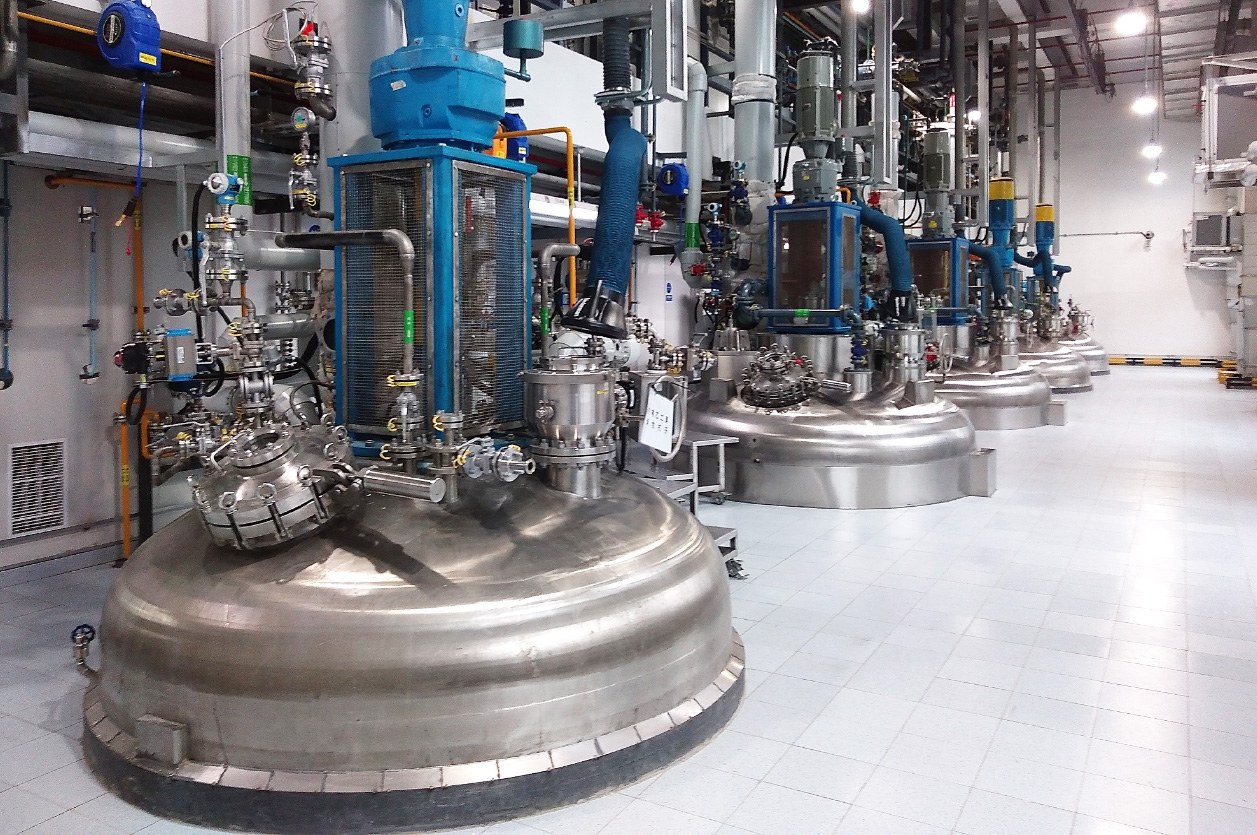
At the Changzhou and Taixing sites in China we have more than 20 solid-phase peptide synthesis production lines, with vessels from 10 litres to 5,000 litres, for a total reactor volume above 137,000 litres across eight plants. SPPS capacity is still being expanded at Taixing and Singapore.
The vessel range matters more than the total. A campaign that jumps from a 50 L pilot straight to 3,000 L carries risk that one moving through the sizes between them does not. The intermediate scales are on the same site, running the same analytical methods.
The platform also runs liquid-phase peptide synthesis, reactor-in-series with process analytical technology data collection, continuous flow chromatography, and tangential flow filtration with precipitation.
Sites: Changzhou, China, 74 acres. Taixing, China, 168 acres, with 84 acres in phase one.
Purification and process mass intensity
Purification is where peptide process economics are decided. Batch preparative chromatography puts a hard limit on throughput and consumes solvent in proportion to the material it fails to recover. Continuous flow chromatography recycles the fractions batch chromatography discards, which raises yield and cuts solvent at the same time. Ion-exchange and reverse-phase purification run alongside it, chosen per molecule.
Commercial peptide manufacture at WuXi TIDES runs at a process mass intensity of 85 per amino acid, against a published industry average of 875 — roughly a tenfold reduction in material consumed per unit of product, which affects cost of goods, the size of the raw material supply chain a program depends on, and the environmental footprint of the process.
Validation and commercial supply
Since 2019 we have run more than 30 PPQ campaigns and taken 12 peptides through qualification with a hundred per cent success rate, across fragments, linear peptides, peptide-drug conjugates, radionuclide-drug conjugates and peptide-PMO.
We deliver more than 60 metric tons of commercial peptide product a year. Two further plants are under construction at Taixing for 2027, and one at Singapore for the second quarter of 2028, which puts peptide manufacturing capacity outside China.
Unnatural amino acids
More than 2,500 unnatural amino acids are in the catalog, including backbone-modified and side-chain-modified amino acids and derivatives of natural amino acids, and more than 16,000 have been customized since 2019. Custom synthesis runs from kilo to metric ton scale under global quality standards, because a residue available only in 50 mg quantities cannot be taken past candidate selection.
Across the series:
Amino acid series
- α-methyl amino acids: natural alanine is used to design α-Me derivatives, and the method extends to other natural amino acids such as leucine and phenylalanine
- N-methyl amino acids: a cyclization process achieves methylation in two steps
- Protecting group series: Boc, Fmoc, Cbz, Mtt, DDE and IVDDE
- α- and β-construction series: enzyme catalyst techniques construct selectable α- or β-site unnatural amino acids
- NCA series: a process developed to control NCA quality effectively
Analytical work at late phase
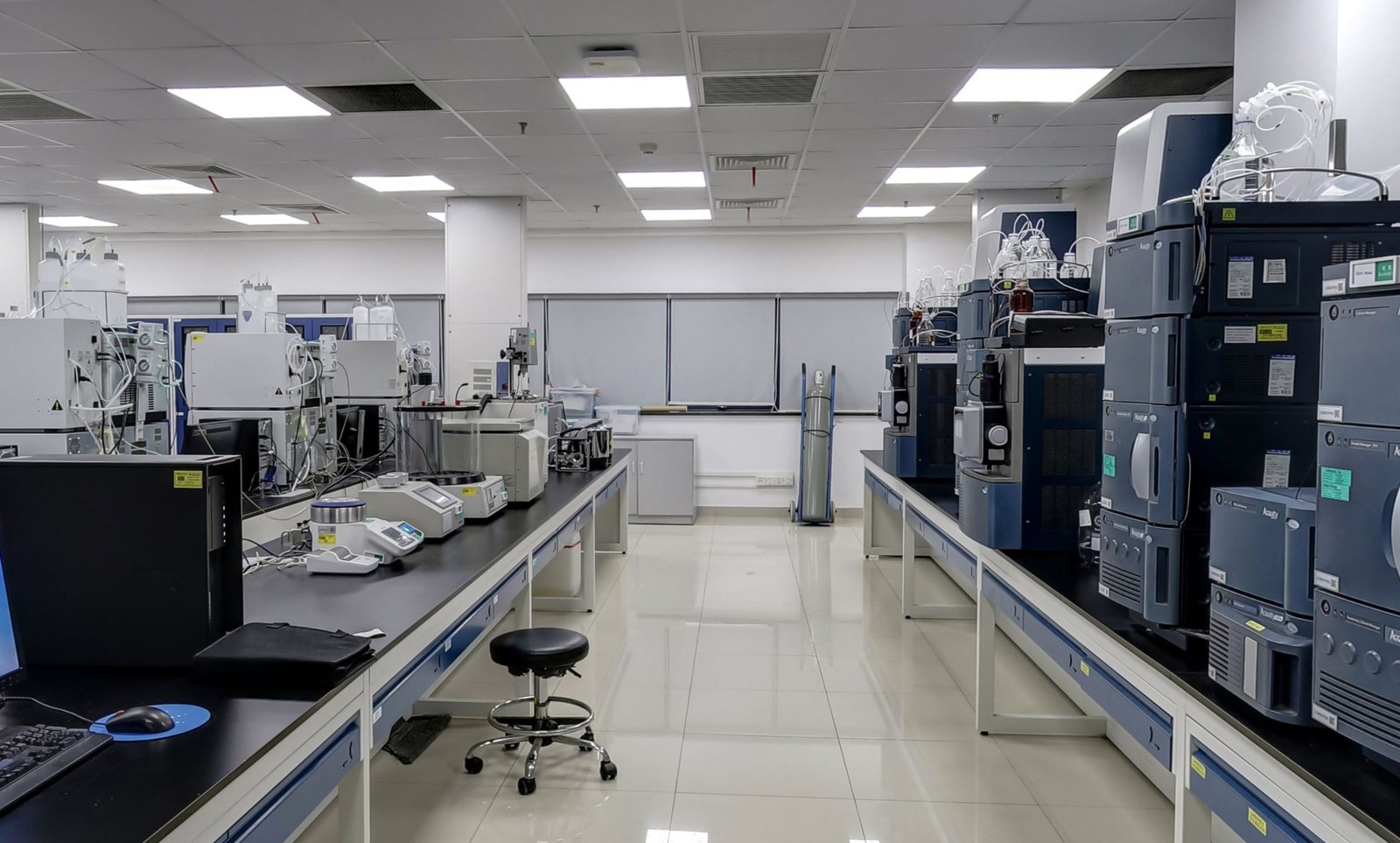
At late phase, analytical method capability determines whether an impurity question can be answered with data. For peptides that means in-house amino acid analysis and enantiomeric purity assessment to quantify D-isomer content, peptide mapping for identity, and LC-MS/MS sequence confirmation for linear, branched and multi-cyclic peptides.
Where higher resolution is needed, multi-dimensional LC-MS supports detailed impurity separation and identification. For programs heading toward a BLA, Bio-ID and bio-assay method transfer, qualification and validation continue from the methods already in use.
The analytical laboratories sit alongside API process development, in the same building, so method troubleshooting during a campaign does not wait on a shipment.
Scaling in steps
A campaign moving from a 50 L pilot to 3,000 L in one step carries risk that a process moving through the intermediate scales does not. More than twenty production lines from 10 L to 5,000 L is what makes scale-up an engineering exercise.
The process developed in early phase is the process that goes into clinical supply, scale-up and validation, with no technology transfer and no second set of analytical methods.

Peptide API
Gram to metric ton on one platform, with the route chosen for how it will behave at 5,000 litres.
Peptide Conjugate
The payload, the linker and the peptide, made in one organization.