
Home / Oligonucleotides and Peptides / Drug Substance / Oligonucleotide / Oligonucleotide API
Oligonucleotide API
One platform from route scouting to commercial supply, with the analytical methods that go into the filing developed alongside the process.
The process is a set of decisions
An oligonucleotide manufacturing process is a synthesis route, a cleavage and deprotection strategy, a purification train, an isolation method and an impurity control strategy. The wrong choice in any of them shows up as cost per gram at commercial scale, and the route in the filing is the route that runs through Phase III.
Our oligonucleotide R&D team is several hundred scientists, and the platform supports development and manufacture from preclinical through to commercial stages.
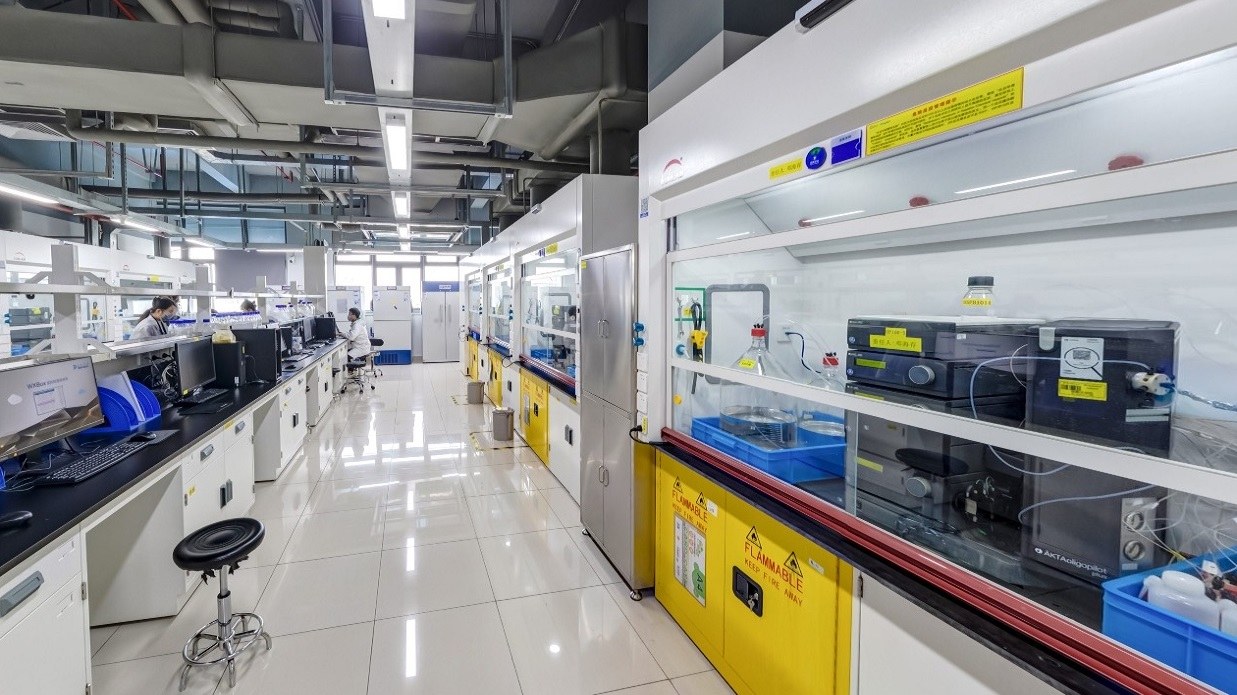
Process development
Development covers a broad range of molecule types.
Molecule types and modified monomers
Development covers a broad range of molecule types: ASO, siRNA, aptamer, oligonucleotide conjugates, PMO and PPMO. Work spans the modified monomers a modern sequence needs — 2′-H, 2′-OH, 2′-F, 2′-OMe, 2′-O-MOE, LNA, cEt and spacers among them — and includes the synthesis of chiral oligonucleotides.
3′ and 5′ end modifications
We modify the 3′ end, the 5′ end or both for a range of attachments, including GalNAc, triphosphate, cholesterol, saccharides, peptides and maleimide.
Scale-up and analytical methods
Development work itself covers coupling efficiency, resin handling and loading, solvent consumption, throughput and batch-to-batch consistency. Those parameters determine whether a process that works at 100 g works at 10 kg. For established modalities, platform processes and validated analytical methods for ASO, siRNA, PMO and sgRNA mean development starts from a known position rather than a blank one.
Route scouting
A sequence that a discovery lab can make is not yet a sequence with a viable process. Route scouting closes that gap, and the route is difficult to change once the IND-enabling campaign has started.
13% yield
18% crude purity
62% yield
75% crude purity
23-mer siRNA-GalNAc case study details
A biotech brought us a 23-mer siRNA-GalNAc for cardiovascular disease. The incoming process gave a 13% yield at 18% crude purity, and the GalNAc moiety was not commercially available. We made the GalNAc, rebuilt the conjugation chemistry and redeveloped the analytical methods around it. The process now runs at 62% yield and 75% crude purity.
Read the case study: two siRNA IND CMC packages completed in 14 months →
Supply of the building blocks
Amidites and solid supports
Key raw materials
Supply-chain resilience
A commercial process has to survive years of small changes without any of them re-opening the questions the filing already answered, and that depends as much on control of the supply chain as on the process itself.
Amidites and solid supports are made in-house, with multiple qualified sources for the key raw materials that are not. For an oligonucleotide program, that removes a single point of failure from the chain: a modified monomer with one supplier and a long lead time.
Conjugates and PPMO
Ligands supported
Conjugate and PPMO manufacturing
The oligonucleotide and peptide API platforms are both at Changzhou, China, which suits the development and manufacture of oligonucleotide and peptide conjugates, peptide-PMO in particular. We have completed dozens of PPMO projects.
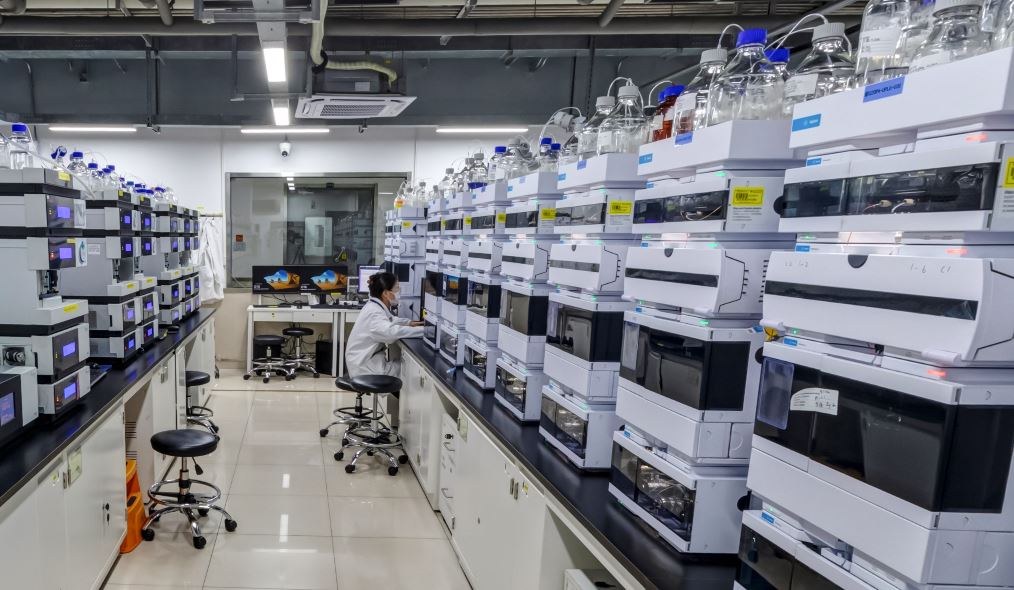
Amidite process development and manufacturing
More than 1,000 amidite molecules have been customized for client programs, including the most challenging structures, supporting projects from discovery through development to commercial stage:
- Sugar backbone: LNA, cEt, UNA, GNA, TNA amidite
- Phosphorus backbone: PACE, PS2, chiral amidite
- 2′, 3′ and 5′ modified amidites
- Base modified amidites: tRNA base, deaza base
Sample amidite molecules: RNAi amidite (2′-F, OMe, MOE, OTBS), LNA amidite, TNA amidite, Vpm-POM, chiral amidite, PACE amidite, thio-amidite and PMO monomer.
Phosphorodiamidate morpholino oligomers
PMOs are short single-stranded DNA analogues built on a backbone of morpholine rings joined by phosphorodiamidate linkages. They are routinely used for gene silencing and have been developed into PMO-based drugs, but synthesizing them remains difficult.
When a modality has no platform, we build one. WuXi TIDES developed a high-loading solid-phase PMO process of its own. It runs on customized reactors up to 100 L, with yields above 50% and crude purities around 75%, and delivers final product above 90% purity with endotoxin below 0.045 EU/mg. The chemistry know-how also supports a range of PMO 5′ modifications, with an improved cleavage and deprotection process.
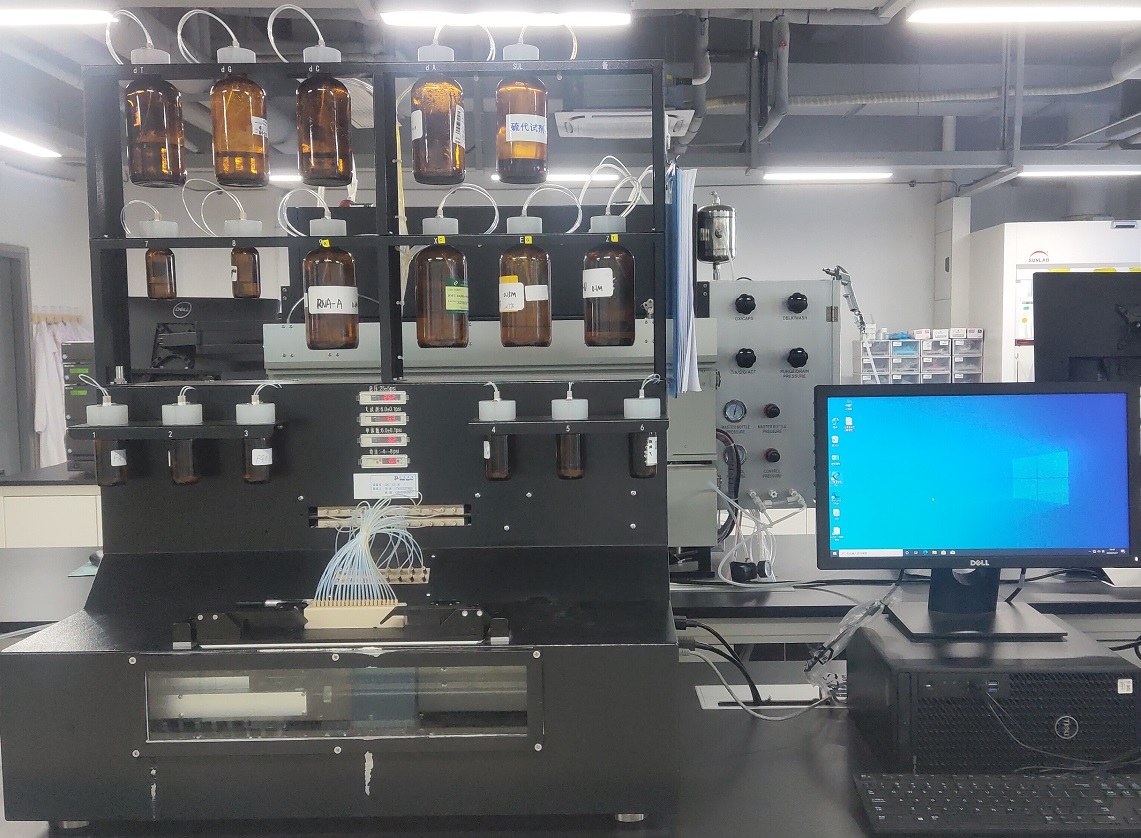
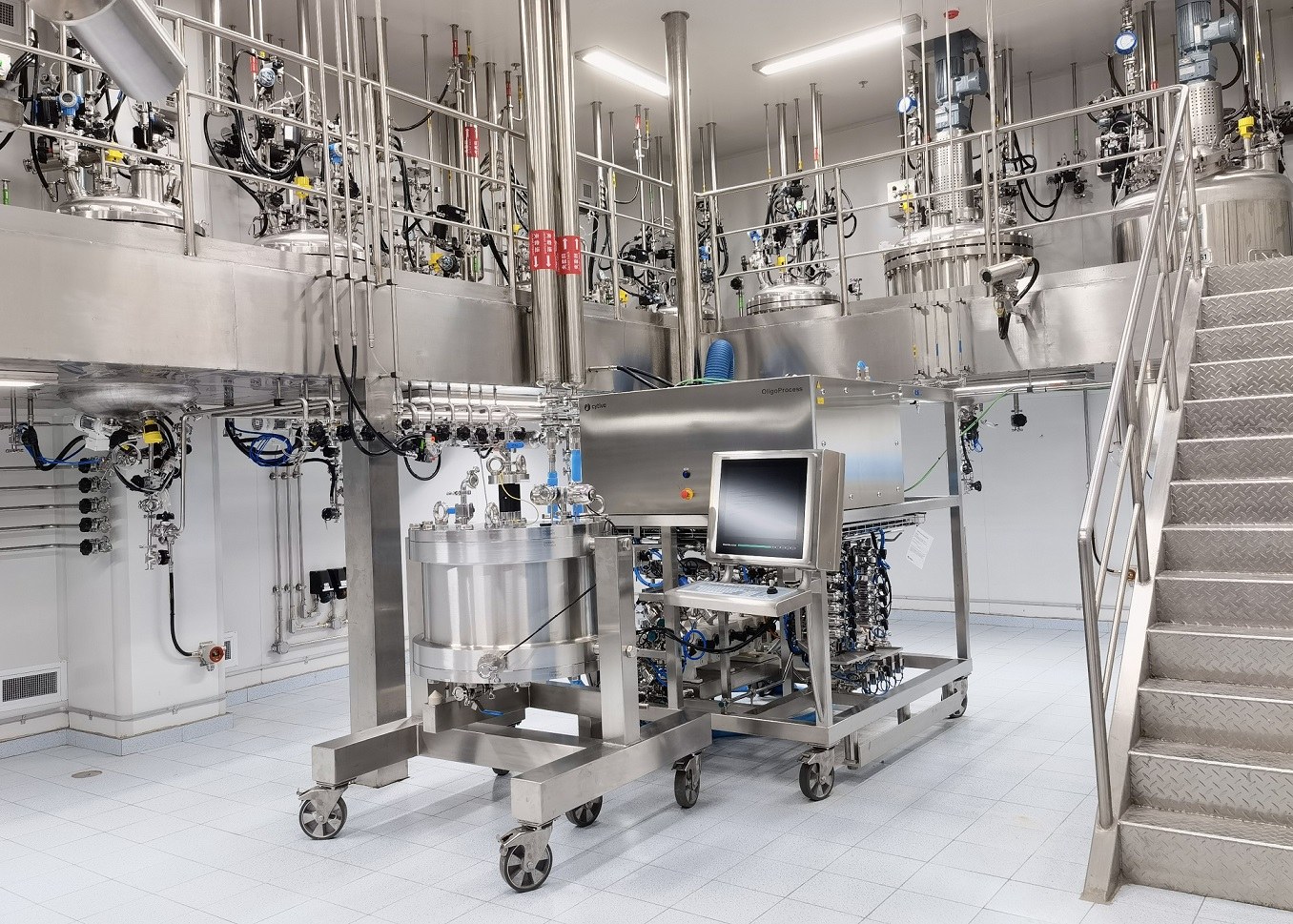
Key equipment
Synthesis
- OligoPilot 100
- OligoPilot 400
- OligoPilot 2000
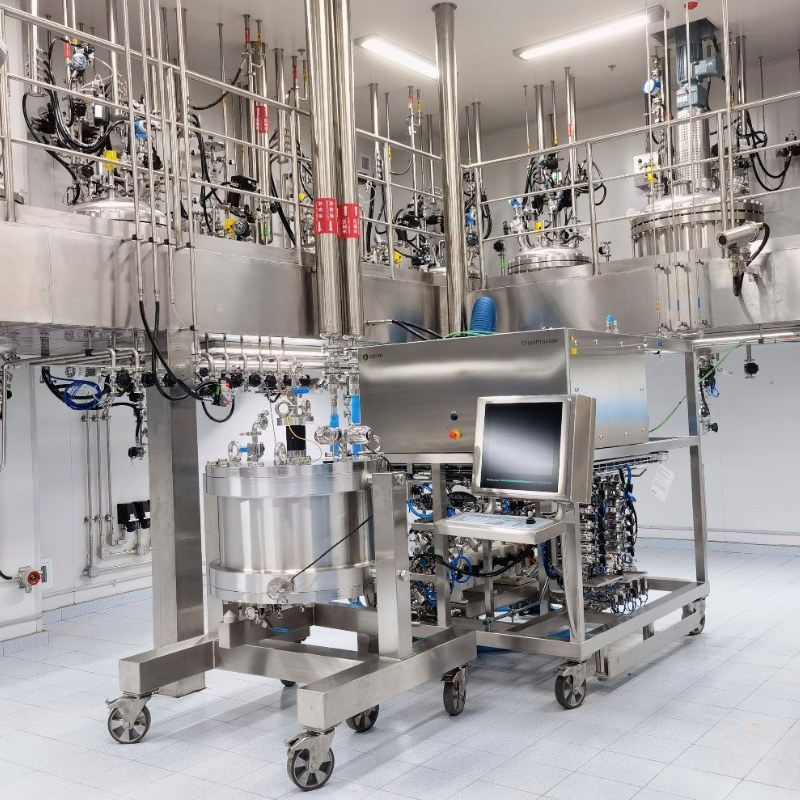
- OligoProcess
- 5–100 L PMO synthesizers
Purification
- Hipersep M450
- Hipersep Pilot
- ÄKTAProcess
- ÄKTA BioProcess
Ultrafiltration, diafiltration and thin-film evaporation
- UniFlux 10
- UniFlux 30
- UniFlux 120
- Thin film evaporator
Lyophilization
- Tray lyophilizers, 0.5 m² to 20 m²
Purification and process optimization
Purification is where late-phase economics are decided. Batch preparative chromatography consumes solvent in proportion to the material it fails to recover, and at clinical scale that becomes the dominant line in the cost of goods.
Continuous flow chromatography recovers the fractions that batch chromatography discards, which raises yield and cuts solvent at the same time. Alongside it we run ion-exchange, reverse-phase, hydrophobic interaction and membrane-enabled purification, chosen per molecule.
On the synthesis side, process options are introduced selectively as scale increases: enzymatic ligation, PN bond formation, precipitation, stirred-bed processing and thin-film evaporation. Each is applied where it improves yield or impurity profile.
Access to new technologies
Sustainability and technology details
Traditional oligonucleotide development and manufacturing processes carry sustainability problems: high waste, poor atom economy and low energy efficiency. We give clients open access to technologies aimed at a greener, more efficient and more cost-effective process:
Ligase-enabled strategies support long RNA constructs in the 60 to 158 mer range and circular RNA, and biocatalysis is used for guide RNA synthesis.
IND-enabling manufacture
An oligonucleotide IND-enabling CMC package can be ready in seven months, using platform processes and established analytical methods rather than developing both from scratch.
How the seven-month package is enabled
That figure comes from three things:
Platform processes that start from a known position
Analytical methods that already exist
API, formulation, analytical and regulatory work reporting into one program rather than running sequentially across several suppliers
Manufacturing
We supply oligonucleotide APIs from millimoles to moles. We operate approximately 30 oligonucleotide manufacturing lines at various scales, including four large-scale OligoProcess systems at Changzhou, China, at a total reactor scale above 8 moles. Further lines are planned at the Taixing and Singapore sites.
Scale-up and cross-functional continuity
The vessel range matters more than the total. A campaign that jumps from a small pilot straight to full scale carries risk that one moving through the sizes between them does not. The intermediate scales are on the same site, running the same analytical methods, which keeps scale-up an engineering question.
Cross-functional teams for API, drug product, analytical and regulatory dossier preparation are streamlined across stages, so knowledge is retained through the product lifecycle rather than transferred at each handover.
Commercial supply
Commercial campaign and PPQ details
For a commercial manufacturing project we completed 100 batches of 900 mmol DNA production, including PPQ-enabling studies and the PPQ campaign itself, delivering more than 400 kilograms of product within nine months.
Since 2019, four oligonucleotides have been through process performance qualification with a 100 percent success rate, with 11 further programs in PPQ-enabling work.
Seven months, and then the same team
An IND-enabling package in seven months comes from platform processes, existing analytical methods and four workstreams in one program.
The process developed early is the process that goes into clinical supply, scale-up and validation, with no technology transfer, no second set of analytical methods and no reconciliation of impurity profiles between organizations.


Discovery Synthesis (oligonucleotide)
Oligonucleotide synthesis for discovery programs.


Project Management
Coordinate API, formulation, analytical and regulatory workstreams.