
Home / Oligonucleotides and Peptides / Drug Product / Parenteral Drug Products / Drug Product Manufacturing
Manufacturing
Clinical and commercial batches on the same lines, with changeover designed in.
Small clinical batches on aseptic lines
A 3,000-vial Phase I batch occupies the same changeover, cleaning and validation effort as a run fifty times larger, which is why small clinical batches are difficult to schedule on capacity built for commercial campaigns.
Our filling lines use single-use technologies and robotic operation, which cuts changeover between programs and reduces operational variability at the same time. The practical result is that a small clinical batch can be scheduled like any other.
Clinical supply manufacturing
The five lines produce clinical trial material for programs from first-in-human through Phase III, with drug substance arriving from an API site in the same network, without crossing a border.
Packaging, labeling and distribution are handled by the same organization, including specialty clinical labeling formats and EU batch certification. Clinical supply covers Phase I through Phase IV, open-label and blinded, for both oral and parenteral dosage forms.
The lines
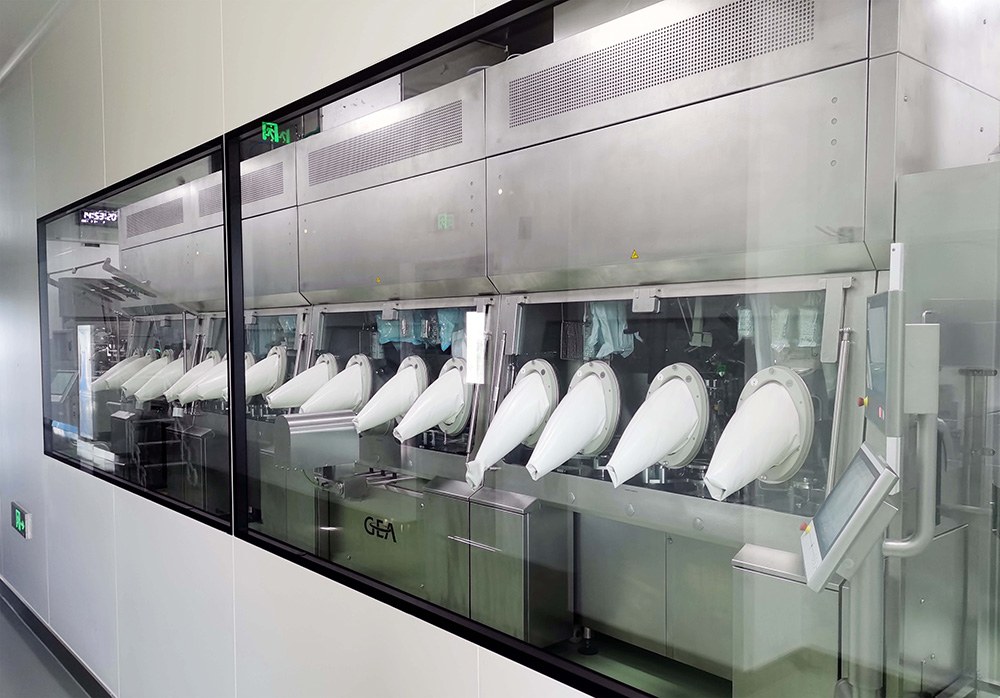
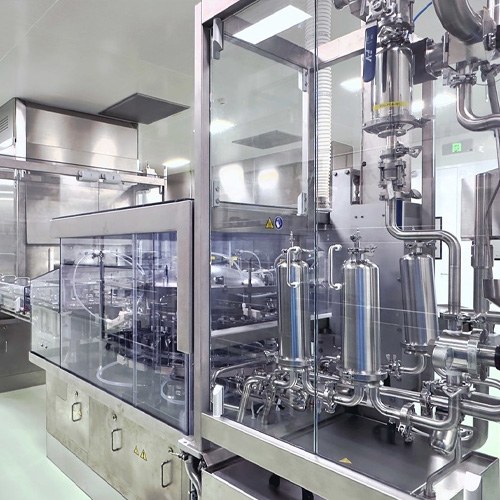
Five aseptic filling lines with fully enclosed isolation systems and automated filling, at a combined capacity of more than 100 million units a year, producing more than 270 sterile batches annually. The lines are wholly automated inside a full isolation system, designed to minimize human intervention and eliminate contamination.
Filling into vials, prefilled syringes, cartridges and LDPE ampoules. Dosage forms cover solution, emulsion, suspension, lyophilized powder and liposome. Batch sizes are flexible, and the lines handle organic solvent compounding and hydrophobic filtration, extremely low fill volumes, high-viscosity mixing and filling, elevated or cold temperature mixing, and dissolved oxygen and headspace control.
Process development and scale-up
In aseptic scale-up the challenge is consistency: filling accuracy, stopper and seal integrity, hold times and environmental control all have to hold at a larger batch size and over a longer run. Fully enclosed isolation systems and automated filling remove most of the human variability that otherwise appears at that point.
For lyophilized products, cycle development and scale-up run on the same equipment types used for commercial manufacture, which is what allows the cycle to transfer without redevelopment. Tray lyophilizers run from 0.5 m² to 20 m² of shelf area.
Registration and validation batches
Registration batches are made under the process that will be validated. Across drug product campaigns to date, process performance qualification has a hundred per cent success record, including multiple Phase III and commercial programs. More than 200 parenteral projects have been supported.
Validation is supported by an analytical operation running more than 85,000 characterization tests a year, using the methods developed alongside the formulation.
Commercial supply and lifecycle management
A commercial drug product accumulates changes: a new market, a container update, an excipient supplier change, a shelf-life extension.
Formulation development, analytical development and manufacturing for a peptide or oligonucleotide product sit in the same organization, on sites in the same network as the API plant, so post-approval changes are assessed against the original development record.
A change of drug product partner at commercialization means re-establishing the packaging configuration, the artwork and the process with an organization that was not there for the clinical work. Commercial manufacture at WuXi TIDES runs at the sites qualified for it, on the same lines and methods as the clinical supply that preceded it.
Where it is made
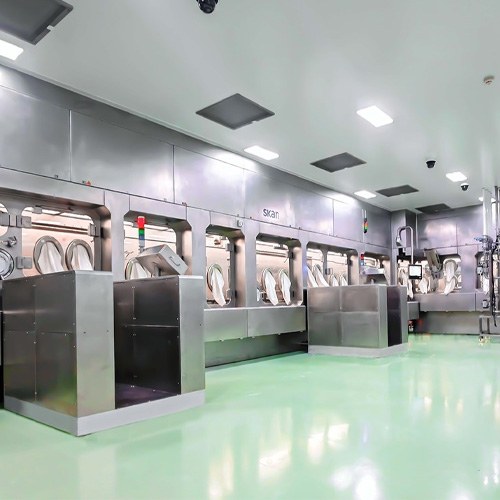
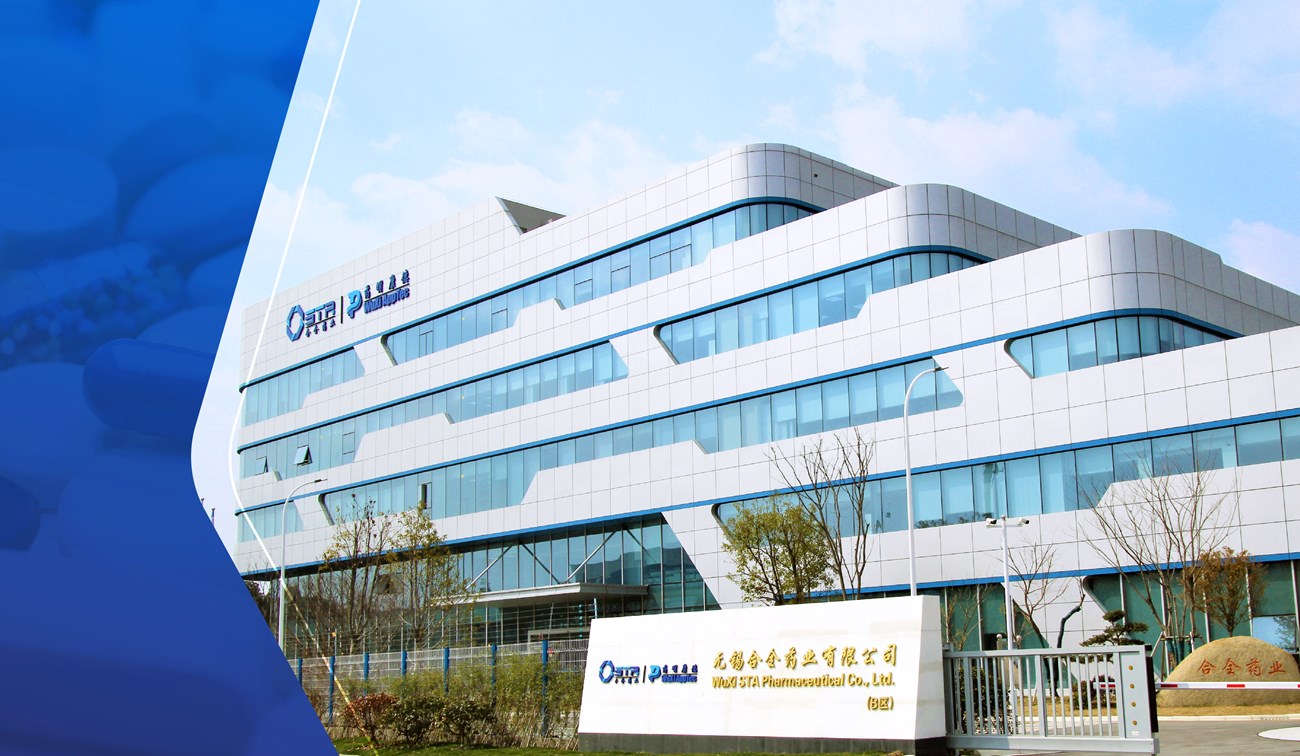
Sterile manufacture for peptides and oligonucleotides runs at Wuxi City, China, with formulation development at Wuxi City and Shanghai Waigaoqiao. Both drug product sites are within a two-hour drive of the oligonucleotide API site at Changzhou.
The parenteral manufacturing network is being extended to the Couvet site in Switzerland and the Middletown, Delaware site in the United States.
Small batches, scheduled
A 3,000-vial Phase I run occupies the same changeover as one 50 times larger. Single-use systems and automated changeover are what make it a scheduling question.
Related Services
Oral Peptide Delivery
CMC Development
Formulation Development
Stage-Focused Solutions
Related content

Quantum Mechanics for Organic Chemists
Quantum Mechanics, Molecular Orbital Theory in particular, enables us to understand organic reactions at deeper levels.
Frequently Asked Questions
QM Magic Class | Chapter 38 Over the years, we received a lot of questions from our readers, below are...
WuXi STA Forms Strategic Partnership with Beta Pharma
STA will Accelerate Process R&D and Manufacturing of Late Phase and Commercial Targets STA Pharmaceutical Co., Ltd., (WuXi STA) –...